Showing posts with label schools. Show all posts

Monday, 23 January 2023

Top of the Bench back in-person for 2022

On Saturday 17 December, RSC Belgium was able to hold our first in-person Top of the Bench (TOTB) regional heat for a few years. The heat was held later in the year than normal, which meant that just two schools were able to take part. But both the British School of Brussels (BSB) and St. Georges International School from Luxembourg were able to field two teams each to compete on the day for a very tight competition.

BSB were on home 'turf' as the event was held in the chemistry laboratories at the school in Tervuren. St. Georges travelled up from Luxembourg on the day arriving in good time for 'kick off' at 13h30.

This year the first part of the competition was an 'Escape Room Challenge' quiz devised by RSC Belgium Committee member Susan Schamp. This was a bit of an icebreaker and definitely a teambuilding effort. Each team had to solve a chain of clues with the first team to ‘escape’ deemed the winner.

After refreshments the second element of the day was the Practical Activity Challenge in which team members needed to make some strategic choices, carry out experiments, process observations and relate their findings to a potential application of recycling a metal. The practical element was, as ever, devised by RSC Committee member Rita Woodward.

Joining Rita and Susan in observing and judging the event were Tim Reynolds and Olivier Schamp (pictured above). RSC teaching staff was represented by Jonathan Norris and St. Georges teachers present throughout the day were Kayleigh van Dongen and Marco Macedo Foz.

A close result

The competition was extremely keen and a very tight contest was eventually won by Team Sodium from the British School of Brussels. In second place was Team Fluorine from St Georges with their Copper team taking 'bronze' position. Team Iodine from BSB was not far behind in fourth.

BSB's Team Sodium won the coveted Keith Price Cup (see above) and will now represent Belgium section at the National finals of TOTB that will be held on Saturday 25 March 2023 at the University of East London. The theme of this event will be Sustainable Energy.

Our thanks as ever to Rita and Susan for developing the written and practical tasks for our Top of the Bench event and all the teams for their enthusiasm and hard work. Congratulation to the winners and everyone who took part.

Wednesday, 13 November 2019

Kitchen Chemistry goes Belgium

In September RSC Belgium embarked on its biggest ever school tour with Prof. Stephen Ashworth of the University of East Anglia, aka the Kitchen Chemist. Our Kitchen Chemistry tour saw Stephen give 15 individual demonstration lectures or talks at six venues over five days. In total over 1 800 individuals participated in at least one of the events. The tour was partially funded by the first ever RSC Outreach Grant awarded to a section based outside the UK or Republic of Ireland and saw the section working with some new venues and audiences. All in all the Kitchen Chemistry tour was a tremendous success!

The tour kicked off on the morning of Monday 16 September with a Kitchen Chemistry demonstration lecture for elementary pupils at St Johns International School in Waterloo. Students from the International School of Flanders also came to this show.

After lunch Prof Ashworth gave a talk on the Periodic Table that he has developed specially for the International Year of the Periodic Table (IYPT2019) to a group of older students.


A quick trip to the museum complex on the Waterloo battlefield was followed by an evening Kitchen Chemistry show for the Waterloo Scouts at St. Antony's Church Hall in Braine-l'Alleud. This was our first event organised for scouts in Belgium.


Tuesday saw the Kitchen Chemist with his chaperon and chauffeur for the week, RSC Belgium secretary Tim Reynolds, heading for the European Commission's Joint Research Centre (JRC) in Geel. At JRC Geel we were hosted by RSC member Dr Hendrik Emons and set up in the centre's auditorium to give a Kitchen Chemistry demo in the morning and the Periodic Table talk in the afternoon. The audience for these two shows were students from the neighbouring European School at Mol plus JRC staff. The JRC are looking to expand their outreach work to schools and hoped to learn from the Kitchen Chemist's experience.


If its Wednesday, then it must be the British School of Brussels in Tervuren. Here three Kitchen Chemistry demonstrations and one Periodic Table talk were given to students during the day. In addition, in the evening a public performance of the Kitchen Chemistry demonstration lecture was given. This evening event was also the prize giving for our 2019 Chemistry Challenge winners.


Woluwe European School was the venue on Thursday 19 September with one performance each of Kitchen Chemistry and the IYPT talk to appreciative student audiences.


The tour was completed on Friday 20 September with our first ever trip to Antwerp. The venue was Antwerp International School where two Kitchen Chemistry demonstrations were given and a final Periodic Table talk.


Our thanks to all the teachers, technicians and RSC Belgium volunteers involved in making this very successful tour a reality. Feedback from students and teachers was universally fantastic and we may well be inviting the Kitchen Chemist back to Belgium in the near future. Second helpings anyone?

Saturday, 4 May 2019

BSB represent Belgium in TOTB Final in Birmingham

On Saturday 9 March, four students from the British School of Brussels (BSB) represented Belgium at the RSC's National Final of the Top of The Bench (TOTB) competition at Birmingham University. BSB were the winners of our hotly contested eliminator that took place in November.

The annual Final event, organised by the Royal Society of Chemistry (RSC), is designed to enthuse and excite children with Chemistry and encourage them to consider further education and careers within Chemistry. The Top of the Bench competition is one of the longest-standing activities organised by the RSC for school students and has been running for more than 20 years.


Sabina (Year 11), YiIlin (Year 10), Mathieu (Year 9) and Xavier (Year 9) from BSB took part in a series of individual and group tasks alongside 31 other schools from across the United Kingdom.


After an individual written test in the morning, the students were assessed in the afternoon during a group problem-solving exercise. This practical task took place in the brand new, state-of-the-art Chemistry laboratory of the University of Birmingham where the students were able to access fantastic facilities only normally found in industrial chemical laboratories. The day ended with a fun and informative lecture on polymers and biopolymers. The students had a look around the campus and enjoyed working in state of the art facilities in Birmingham and thoroughly enjoyed this day in a world class institution.

Friday, 8 July 2016

St George's and the TOTB Dragon 2016

In November, St George’s School in Luxembourg City entered two teams into the RSC Belgium annual ‘Top of the Bench’ (TOTB) competition. This prestigious event is open to all schools in Belgium and Luxembourg region. 

The RSC Belgium ‘eliminator’ took place in unusual circumstances as the planned event in Brussels had to be cancelled at the very last minute (St. Georges were already on the bus from Luxembourg) due to a terrorist threat and the subsequent ‘security lock down’ of Brussels.

So instead of the 'face-to-face' event, each team was sent tests to complete and return to the section for marking. Team Hydrogen from St George's did really well and won the RSC Belgium regional heat! And as a result of this victory they received the Keith Price Cup and entry into the final of the TOTB competition representing RSC Belgium. The following is a short description of their experience at the RSC's main competition in the UK.


TOTB
The TOTB final was held at Loughborough University, in the UK on Saturday 16 April. It was jointly hosted by the Royal Society of Chemistry and Loughborough University’s Chemistry department. In total 32 teams participated in the event, all of which had made it through their regional eliminator rounds to earn the right to compete against the best schools in the UK (and St George’s).


It was a great event, starting with an individual round – which was essentially a chemistry exam, followed by the main event which was a team round involving a series of very complicated chemistry investigations regarding batteries and energy (see above). To round off the day, students were invited to view interactive presentations from some of Loughborough University’s post-graduate chemistry students on the various research projects that they were working on. All the competing teams were used as a voting panel and asked to decide where they would like to see further funding utilised.

Despite the St. George's team not making it into the top six ranked places, this competition was an excellent opportunity for the students to challenge themselves and see the various avenues of research that university students are taking after studying chemistry.

This event certainly stretched their ability and provided a great insight into teamwork and working under pressure. Overall it was an enjoyable experience for all members involved, including the staff!


The St. George's team (pictured above) consisted of the following students: Ethan – Year 11 (Team Captain); Yi hua – Year 10; Alistair – Year 9; and Alexios – Year 9. The team were accompanied to Loughborough by their teachers Mr Stenton and Mrs Winter. Well done St. George's!

Thursday, 10 March 2016

The Road to Loughborough – The Belgian Top of the Bench Experience 2015

Every year RSC Belgium runs an eliminator competition for schools in Belgium to choose a team to participate in the RSC’s Top of the Bench competition in the UK. The eliminator is usually held in November in Belgium to select a team to compete in the TOTB final held in the UK in the following spring.

In 2014 the winning Belgium team was Team Boron (pictured below) from the European School Brussels IV at Laeken in Brussels. This was the first time that the recently opened school had competed in the RSC Belgium competition. This following essay was written by team member Carlo Stella and recounts his experiences of the competition in Belgium and at the final in the UK in April 2015.

The RSC Belgium team selected to participate in the 2016 final is St Georges School from Luxembourg.


RSC Belgium TOTB
The RSC Belgium section was established in the mid 1980’s and has over 100 members. The section organises lectures and visits every year with the majority of activities, including extremely popular annual demonstration lectures, held in or around the Brussels area. However, group expeditions, both professional and social, are also organised throughout Belgium and beyond!

The section is growing its links with schools, both in the Anglophone educational community and the wider Belgian and European language communities, through poster and essay competitions and other outreach activities. And the section runs a national elimination round to select a team from Belgium to attend the annual RSC Top of the Bench (TOTB) in the UK.

Schools were invited to select up to two teams of four students per school to compete to represent RSC Belgium in the Top of the Bench National Final to be held at Loughborough University in the UK on 25 April 2015.

The Eliminator Competition included individual tests of factual chemical knowledge and data interpretation with a team-based practical problem solving activity.

In the UK Final, prizes are given for the best overall school performance and runner up teams. The Jacqui Clee Award is given for an outstanding individual contribution to the day. Travel and accommodation expenses are covered by RSC UK for the selected team and one accompanying teacher.

Team selection
Before forming a group there was an internal elimination round to make up the two groups which will participate in the RSC Belgium eliminator that was held at the British School of Brussels. We started planning in November when our Chemistry teacher announced the possibility to join a team for a Chemistry competition.

TOTB teams are composed as follows: one year S5, one S4 and two S3 students. Only two teams from the European School Brussels IV at Laeken (EEB4) could enter.

There were about 10 candidates in S4 EN. We had to pass a preliminary test as only two S4 students could participate. I was very surprised when they told me I’d made it through. Two teams were formed: Team Boron (Samuil Iskarov S3, Kristian Iliev S3, Carlo Stella S4, Deyan Pehlivanov S5) and Team Argon (Leo Tyrpac S3, Daniel Spasic S3, Victor Elgersma S4, Timothy Rhein S5).

Belgian competition
To qualify to participate in the TOTB final in the UK, we had to compete against other schools from Belgium and Luxembourg. The competition took place in the British School of Brussels. There were a total of 15 teams from all over Belgium and Luxembourg. We had to complete a written test and then perform a practical experiment.

At the end of the day it was announced that team Boron was the first place winner! At first I couldn’t remember who team Boron was. Then they called our names and we received a cup. The other EEB4 team (Argon) was in third place. It was the first time EEB4 had entered the competition and both of our teams had done really well! We were all very happy.

Loughborough final
It was announced that the winning team had to go to Loughborough University to compete in the final. There would be 32 teams participating!

We departed on Friday 24 April on the Eurostar with our team and our exceptional Chemistry teacher Mrs. Mary Jaeger. Then we took an East Midlands Train Service to Loughborough town. The journey was quite long but we finally made it there.

The University campus was gigantic covering almost half of the town. On Saturday morning we got a briefing about the events. The topic of the tests was ‘Chemistry in Food- Organic Chemistry’. We passed a 30 minute individual test in a big university lecture hall. The test was extremely hard and contained topics which were studied in first or second year university courses. I saw many people leaving blank questions.

The second part of the test consisted of a group laboratory experiment. They made us visit the University labs, which were fabulously equipped. The material was set already for each team. The countdown started. Now, this experiment was really impossible. We had with us a 20 page booklet featuring the ‘Procedures’ and some apparatus on the table. However, in the pages they gave us, they told us what to do but not how to do it so we had to figure out how to perform the tasks.

Team work
There was a lot of team work required as it was a very difficult task and on top of that there were judges (senior chemistry teachers) walking around observing every action we made. We distributed out the roles. We were confronted with tasks and problems and we had no idea how to handle them. After a few tries we got the first part right, but then we still had to do the second part of the booklet. We got mostly through the second part but suddenly we were out of time. I am not supposed to tell you what questions they asked us, but I can tell you it was far too hard!  The experiment involved specialised university machines with light spectrum frequencies analysers… I guess the whole point of the competition was testing our ability to react towards unknown content.

I know we have done our best and I am confident that we will be in the first half of the teams. Unfortunately, we know we are not in the top six but we don’t know yet what rating we obtained. Due to the difficulty of the task I would be very content rating in the middle.

After missing the East Midlands train due to a slow taxi driver we finally managed to return back to Brussels a few hours later. We had a very brief stop in the Science Museum in London. I went straight up to the last floor to see the aviation part of the museum (the best part). Then we took the Eurostar back.

I encourage everyone to take part in the RSC competitions because you will never forget nor regret it! It has definitely been the BEST trip I’ve ever had! Special thanks to Mrs. Jaeger for promoting Chemistry throughout the Secondary students and of course for engaging us in competitions!

“Colour is Fun” brightens up Brussels

In the first week of March, RSC Belgium organised for Andrew Hanson from the National Physical Laboratory in Teddington, U.K. to tour a number of schools and give a public presentation of his well-known lecture “Colour is Fun”. Andrew visited the European School Brussels II at Woluwe, St. John’s International School in Waterloo, the European School Brussels III at Ixelles, the British School of Brussels at Tervuren and the International School of Flanders (ISF) in Sint-Genesius-Rode, and gave an evening public presentation at the Université Catholique de Louvain’s Woluwe campus in Brussels on 2 March. At each location the lecture met with an enthusiastic reception from the audience, staff and pupils.

Andrew is Outreach Manager and Senior Research Scientist at the National Physical Laboratory (NPL), the UK's National Measurement Institute, and a world-leading centre of excellence in developing and applying the most accurate measurement standards available. For over 25 years he has been professionally measuring colour there, from evaluating the appearance of ornamental plants, to building the world’s first national standards telespectroradiometer to calibrate the colour of visual display units and a machine to measure the shininess of cats!


Colour measurement
His lecture tour brightened up a grey week at the end of winter for his audiences with its many colourful and animated slides. The lecture showed how colours are formed by splitting white light into the different wavelengths which we see as colour, how these are absorbed or reflected by the materials we see and the mechanism by which the eye transmits colour messages to the brain.

Equipment for colour measurement was described and how this enabled the definition of any particular colour, important for quality control in many different areas. Several demonstrations revealed how the eye can retain a reverse colour image when the image is removed – Andrew ‘magiced’ the Belgian flag from white, indigo and duck egg blue stripes. Drawing attention to how our perception of colour is determined by the surroundings of that colour, by the end of the lecture the audience was convinced that what had appeared to be four distinctly different colours at the start were in fact the same.


Whilst Andrew is a physicist, his lecture also highlighted the role of chemistry in determining the colour of materials, and in the development of new dyestuffs and colours.

Shiny cats! 
And, yes, there was an image of a shiny cat! And do not be surprised if the next lecture makes reference to the colour of the Belgian chocolate which Andrew took home with him…
In total, the Andrew’s lectures were enjoyed by over 600 students, staff and members of the public. ISF have reported the event on their Facebook page.

We have to thank the NPL for making Andrew’s time available to conduct this lecture tour, and the staff members at the schools who organised the event on the ground.

Wednesday, 10 February 2016

Luxembourg to represent Belgium in Top of the Bench!

The results of the RSC Belgium Top of the Bench (ToTB) eliminator for 2015 have been announced. And the holder of the Keith Price Cup (pictured right) for 2016 - and the Belgian representative in the TOTB grand final in the UK - will be team Hydrogen from St. George's International School in Luxembourg!

This year we were unable to hold our usual practical Saturday event - scheduled for 21 November - due to the Brussels security lock down that came into force on the morning of our event. Fortunately we were able to inform all our competing teams before any of them started to travel to the British School.

Unfortunately it was not possible to find a Saturday afternoon slot to re-schedule the TOTB Eliminator Round before the RSC HQ deadline date for submission of team details of 31 January 2016. So a modified form of the Eliminator was held at each competing school.


This consisted of a written question paper and a challenging Practical Problem Solving Exercise. Although the competition this year did not involve any 'hands-on' practical work the format developed by our resident competition guru, Rita Woodward, gave the students more than just a standard paper and pencil test of their chemical know-how. Students from the Oxygen team at the SHAPE International School are pictured above taking part in the competition at their school.

Winners
Members of Hydrogen, the winning team from St George’s Luxembourg, each received a RSC heat sensitive mug and the school will hold the TOTB Keith Price Cup during 2016.

St. George's School Principal, Dr Christian Barkei, was really pleased with the team's success and the win has been reported in some Luxembourg newspapers: 'Young chemists set eyes on prize in UK contest'  (Wort.lu) and 'St George’s Hydrogen Team Wins Royal Society of Chemistry Regional Event in Belgium' (Chronicle.lu).

The Runner–Up team was team Calcium from the European School Brussels 4 in Laeken (EEB4) and Calcium team members each received a RSC phone battery charger as did those students who scored the top mark in the written paper for each of the three year groups that form the TOTB teams. Every student that took part in the competition received a certificate.


The winning Team Hydrogen from St George's are pictured above with the Keith Price Cup and their certificates. Pictured from left to right are team members Alexios Valsamidis, Alistair Reid, Yi-hua Lim and Ethan Utting.  Mark Stenton, Head of Science at St. George's said all the team were very pleased with the trophy, their certificates and their additional gifts!

Full results
Despite our troubles and tribulations the eliminator was, as ever, a close-fought competition with a total of nine from six schools taking part.

The full line up of participating teams for the 2015 competition is listed below:
The TOTB Finals take place in Loughborough in the UK on 16 April 2016 and RSC sponsors the travel arrangements for our winning team. The RSC Belgium team is the only competing school team not based in the British Isles.
  
Our next TOTB Eliminator Round will, hopefully, take place in November 2016.

Wednesday, 23 April 2014

A Better Bang in Brussels

On 7 and 8 April RSC Belgium was delighted to welcome Dr Hal Sosabowski of Brighton University (right, below) and his top team of Dave 'Sideshow' Campbell (centre) and Kurt 'the Driver' Charnock (left) back to Belgium for four explosive demonstration lectures.


The demos were staged in the Roi Baudouin lecture theatres in the Rosalind Franklin Building of the Universite Catholique Louvain (UCL) Woluwe Campus in Brussels.

Three daytime lectures for school audiences (one on Monday 7 April and two on Tuesday 8 April) and an evening public lecture on Monday were staged with the support Air Liquide (for gases), Prof Istvan Marko and Fabio Lucaccioni at UCL Louvain-la-Neuve, and the local team at UCL Woluwe.


Audiences totalled well over 500 over the four shows and everyone left with a smile on their face, inspired and having learnt something new!


Each show lasted well over an hour with questions afterwards and featured classic experiments such as the deadly 'Phosphorus Sun' (above) and the rasping 'Barking Dogs' (below) - the latter involving some infeasibly large test tubes.


Feedback from teachers, members, friends and students was all extremely positive and we'll try not to leave it so long for Dr. Hal's next shows in Belgium.

Monday, 10 March 2014

RSC Belgium announces its Chemistry Challenge 2014

The RSC Belgium Section is pleased to announce its Schools Chemistry Challenge 2014! This stimulating chemistry competition is open to students from any school in Belgium, so please spread the word to any appropriate educational institutions or organisations that you are involved with. We would like to make the 2014 Challenge bigger and better than ever!

Details of the 2014 competition format can be downloaded here. The questions will be set in English, but may be answered in English, French, Dutch or German.

The competition is open to school students in their penultimate year of High School (usually aged 16 – 17) and consists of a total of two hours of written test papers held in individual schools and designed to demonstrate the participants’ knowledge of chemistry and their ability to think logically.

Two formats
The Challenge can be taken in two ways: either as a single two-hour paper or split into three stand-alone, separate sections (Section A 30 minutes, Section B 60 minutes and Section C 30 minutes) which teachers might find easier to work into their timetable constraints. Teachers would need to decide on their preference by the time they tell us the approximate numbers of students that will participate in the 2014 challenge from their school.

The common curriculum on which the competition will be based can be found here. This has been reviewed and validated by teachers in 2012 and 2013.

The Challenge papers themselves will be distributed to participating schools in May with completed papers to be returned during June.

As ever, very attractive cash prizes are offered, as well as certificates acknowledging participation for all students that take part. From our previous experience we have found that students felt that participation was a valuable ‘plus point’ when completing University application forms, clearly demonstrating an ‘extra curricular’ interest in a science subject.

More information
For further information, please contact our challenge coordinator Rita Woodward or via the usual RSC Belgium email address.

Saturday, 9 March 2013

RSC Belgium launches 2013 Chemistry Challenge


Following a small pilot run in 2010 and two highly successful full runs in 2011 and 2012, RSC Belgium Section is happy to announce its Schools Chemistry Challenge 2013. 

The RSC Belgium Chemistry Challenge competition is open to students from any school in Belgium. The section is looking to make the 2013 Challenge an even bigger chemistry competition! In 2012, well over 100 students took part.

Details of the 2013 competition format can be accessed here. The Chemistry Challenge questions will be set in English, but may be answered in English, French, Dutch or German.

The competition is open to school students in their penultimate year of High School (usually aged 16 – 17) and consists of a total of two hours of written test papers held in individual schools and designed to demonstrate the participants’ knowledge of chemistry and their ability to think logically.

Two formats
For 2013 the Challenge can be taken in two ways: either as a single two-hour paper (as for 2012) or split into three stand-alone, separate sections (Section A 30 minutes, Section B 60 minutes and Section C 30 minutes) which teachers might find easier to work into their timetable constraints. Teachers would need to decide on their preference by the time they tell us the approximate numbers of students that will participate in the 2013 challenge from their school.

To get a taste of the Challenge you can access the 2012 papers here.

There are plenty of attractive cash prizes on offer for the highest scoring entries, as well as certificates acknowledging participation for everyone who takes part.

We have found that students find that participation in the Challenge is a valuable ‘plus point’ when completing University application forms, clearly demonstrating an ‘extra curricular’ interest in science.

More information
For further information, please contact our challenge coordinator Rita Woodward via email and section secretary Tim Reynolds as soon as possible.

The common curriculum on which the competition will be based will be circulated for validation by teachers in the near future. The Challenge papers will then be distributed to participating schools in mid-May with completed papers to be returned to Rita during June.

Tuesday, 5 February 2013

Healthy Science Prize

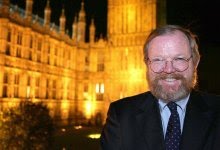
The 2013 RSC Bill Bryson Prize Competition has just been announced. The prize is designed to recognise and encourage excellent science communication in schools and colleges. The prize is supported by well-known writer and commentator Bill Bryson (above) who is also involved with the judging process.And there is an international category – so entries from Belgium are welcome!

The competition is open to all students aged 5-18 with entries accepted in any format as long as they accurately communicate science appropriate for their chosen audience. Entries could be in the form of videos, podcasts, posters, or cartoons and poems. Use your imagination – your creative idea is the key to success in this competition!

This year the question posed by the RSC Bill Bryson Prize is: ‘How does science keep us healthy?’

Students aged 5–18 around the world will be thinking up creative answers to this question. Competition entries can be submitted in any format, from posters to puzzles to podcasts, as long as the content fits with the 2013 theme.

Closing date
This popular competition will be judged in three categories, primary school, secondary school and international, with both individual and group entries accepted. The closing date for entries is 31 March 2013.

The best entries from each category will receive a prize of £500 (~€625) for their school, and £100 (~€125) for the winning students to share. Bill Bryson will present UK winners with their prizes in the Houses of Parliament.

Visit the RSC website for more information and details of how to enter. A promotional poster for the competition can be downloaded here.

Chemistry Week 2013
The theme of the Bill Bryson Prize fits with the theme of this year’s Chemistry Week, which will take place between 16 and 23 November 2013. The overall theme is ‘Health’ covering topics such as Ageing, Hygiene, Lifestyle, Nutrition and Future Health.

Tuesday, 25 September 2012

Chemistry Challenge Competition 2012

The results of the RSC Belgium Chemistry Challenge 2012 have been announced and the talented prize winners will be picking up their winnings at the next RSC Belgium event on 23 October. This year we recieved 112 eligible entries to this testing challenge of young people's chemical knowledge and initiative.

The paper is into three sections:

  • A/ A chemistry multiple choice paper
  • B/ A structured questions on chemistry, and
  • C/ A 'Thinking Matters' paper that is not chemistry based

And the top results were as follows:

Section A

  • First - Ally McDermott (BSB) and Riccardo Terzi (Woluwe EEII)
  • Second - Stefano Vianella (Woluwe EEII)
  • Third - Jaewar Bahr (ISB), Alexander Ashley (BSB), Callum Scott (BSB)

Section B

  • First - Madhavi Jha (ISB)
  • Second - Ciaren Daly (ISB), Yoon-Mok Yang (ISB), Ally McDermot (BSB), Bartosz Animucki (Uccle EEI)
  • Third - Ayako Fujihara (BSB)

Section C

  • First - Alexander Ashley (BSB)
  • Second - Gavin Kiely (Woluwe EEII)
  • Third - Stefano Vianello (Woluwe EEII)

Ally McDermot also recieves the Keith Price Prize for best overall score in sections A and B. First prize winners recieve €50, second €25 and third places €10 with the winner of the Keith Price Prize recieving an additional €100. Well done to everyone that took part! We will be running the Challenge again in 2013.

Challenge
The Chemistry Challenge competition was devised and compiled by RSC Belgium treasurer Rita Woodward and is open to students from any school in Belgium. The questions are set in English, but may be answered in English, French, Dutch or German.

The competition is open to school students in their penultimate year of High School (usually aged 16 – 17), and consists of a 2 hour written test held in school and designed to demonstrate the participants’ knowledge of chemistry and their ability to think logically.

Try it yoursef!
Now you can test your chemical knowledge and problem solving ability. The 2012 Chemistry Challenge paper can be downloaded here. Tell us how you got on!

Saturday, 9 June 2012

RSC ready for the Olympics

In time for the London 2012 Olympic Games the Royal Society of Chemistry has launched a new Chemistry in the Olympics website and a global experiment to engage students with the chemistry behind the Olympics. The website features educational resources for teachers and students to explore the chemistry behind sport.

Alistair Brownlee, twice world champion triathlete and a former chemistry student, introduces the global experiment and talks about the role chemistry played in his own education and how chemistry is vital to his sport.

The RSC is promoting the global experiment to school students around the world and participants from the UK, USA and New Zealand have already been involved - so why not take a look and have a go yourself?

The experiment aims to test the effects of sports drinks on athletic performance and encourages participation from students of all ages. The experiment and activities can be completed at school in groups or individually at home. Particpants are asked to:

  • Run 100 metres after consuming either a sports drink or water
  • Test the effects of sports drinks on physical performance
  • Anaylse the data and discuss the role of chemistry in sports drinks
  • Upload their results and location to an interactive map to compare with students all over the world

The RSC have formulated a generic sports drink recipe including sugar-free squash, water, salt and sugar. Watch the new Global Experiment video where a class of primary students show ho wthey did the experiment.

Children in school and at home are encouraged to take part and upload their results before the start of this year's London Olympics on 27th July.

Wednesday, 23 May 2012

TOTB 2012 - The Inside Story

Thanks to Giulia Greed from the European School Brussels II in Woluwe for writing up her Top of the Bench (TOTB) experience for us.

The Scientists (Giulia, Caitriona, Nora, and Thomas - see above) met up with Mrs Deegan at around midday, at Gare du Midi, where we would take the Eurostar to London. Once we had arrived in London, Mrs D bought us underground tickets, and we left for our hotel, which was directly opposite Hyde Park.

We settled in, had a short rest, then we set off again - to Leicester square, to buy tickets for the theatre. We looked at the available shows, and we decided on one of them. Mrs D returned from the ticket booth, clutching the Wicked tickets. The Scientists were all getting hungry, so we went for a meal near Covent Garden, then for an ice cream. Next, we went to the theatre to see Wicked, which was really good. Afterwards, we took the Underground back to the hotel, and then went to sleep.

The next morning, we had breakfast, got ready, then we then left the hotel and set off walking through Hyde Park, to Imperial College (where the competition was being held). While we were walking, Mrs D tested the Scientists and talked to us on chemistry.

Brussels crew
Once we were at Imperial, we were talked through the safety announcements, and soon afterwards we were ushered into a lecture hall, where we would be having the written exam. It only lasted half an hour, then we all had a snack.

Next, was the practical team exam, so we went into the labs. The judges explained: the envelope on the table contained the first challenge. The papers on the side made up the second challenge. Everything we needed was in our workspace. We were given lab coats and gloves. We were known to the judges as “the Brussels crew”.

After the first challenge, we had a one minute break. Then the judges described the second challenge. Both challenges went well. After that we ate lunch, followed by a short break, and then the scientists attended a short lecture on the chemistry in mobile phones.

Next: the award ceremony. Our team came 14th out of 30 - a result we were very pleased with!

Saturday, 12 May 2012

Woluwe at TOTB Final

RSC Belgium was represented at the RSC's Top of the Bench (TOTB) final on 31 March by European School Brussels II at Woluwe (see team photo below). The winners of our own 'national' competition and holders of the Keith Price Cup had a great time at Imperial College London and secured an excellent 'mid-table' result.

"The team came 15th out of around 30 competing schools," reported Julie Deegan, the team's teacher and head of chemistry at Woluwe. "The higher placed teams were all prestigious UK grammar or private schools."


In the highly competitive final each student had to sit an individual written test designed by the RSC and together each team carried out two practical activities: one set by RSC and the other by Imperial College staff.

"The students thought the written test was very traditional and GCSE-like," says Julie. "Questions about the Haber and Contact process, and others about recalling the chemical symbols for less well-known elements were not so popular with our students!"

Practical posers
This year's RSC Belgium eliminator had, for the first time, included a practical element, so the problem-solving laboratory element of the final was not a surprise to the Woluwe team. "The practical task was in two parts," continues Julie. "The first to identify three unknown liquids or solutions using no additional reagents. The second part was a titration, for which the older students had to take a leading role."

The TOTB Final practical session in full swing (image copyright © michele panzeri 2012).

Chemistry Challenge
The next major schools' activity for RSC Belgium is about to commence: the Chemistry Challenge. The papers are being printed for distribution to participating schools. This individual chemistry puzzler is open to 16-17 year old students and we hope to involve well over 100 students in this year's competition.

Tuesday, 7 February 2012

LearnChemistry with RSC

The Royal Society of Chemistry (RSC) has just launched a comprehensive online site dedicated to chemistry education. And it is open to all.

The RSC's LearnChemistry website brings together hundreds of resources, a place to share ideas and support for both teachers and students.


The RSC has developed a huge range of educational resources and the LearnChemistry initiative brings them together in one place to make them easily accessible and searchable.

The site also takes a throughly modern approach to teaching using videos, simulations and interactive games to capture students attention and bring the fascination of chemistry into the classroom or home setting.

Talk chemistry
The site features the 'Talk Chemistry' area which provides teachers with a platform to talk about curriculum issues, share news and opinions.

The site also includes Gridlocks - a interactive chemistry game based on the Sudoku concept and a set of videos 'Faces of Chemistry' developed with industrial partners such as Johnson Matthey, Procter & Gamble and Syngenta. In addition the RSC has relaunched and augmented its Visual Elements Periodic Table (see below) to coincide with the LearnChemistry launch.


Content will be continuously added to the site. For example in March the RSC will launch its 2012 Olympic-themed chemistry and sport site. This will examine the role chemistry plays in every sport from archery to aerobics.

The RSC sees LearnChemistry as a community-led site so it is encouraging feedback and input from teachers and students. So why not take a look at LearnChemistry and help us create a new generation of people excited by chemistry.

Science in School
Another web-based resource that will be of interest is 'Science in School' - the European journal for science teachers. It covers not only biology, physics and chemistry, but also earth sciences, engineering and medicine, highlighting the best in teaching and cutting-edge research, and focusing on interdisciplinary work. The contents include teaching materials, recent discoveries in science, education projects, interviews with young scientists and inspiring teachers, and much more.


'Science in School' is freely available. Online articles are published in many European languages and an English-language print version is distributed across Europe. Originally supported by the European Commission, the journal is published and funded by EIROforum, a partnership between eight of Europe’s largest intergovernmental research organisations including including CERN, the European Space Agency (ESA) and the European Molecular Biology Laboratory (EMBL).

European school teachers are invited to help by:
• Submitting articles for publication
• Joining the referee panel and helping to decide which articles to publish
• Reviewing books and other resources for teachers
• Translating articles from English into their native languages.

To subscribe, learn more about the journal or read all the articles visit the Science in School website.