Showing posts with label british school of brussels. Show all posts

Friday, 24 October 2025

New windows on our Universe

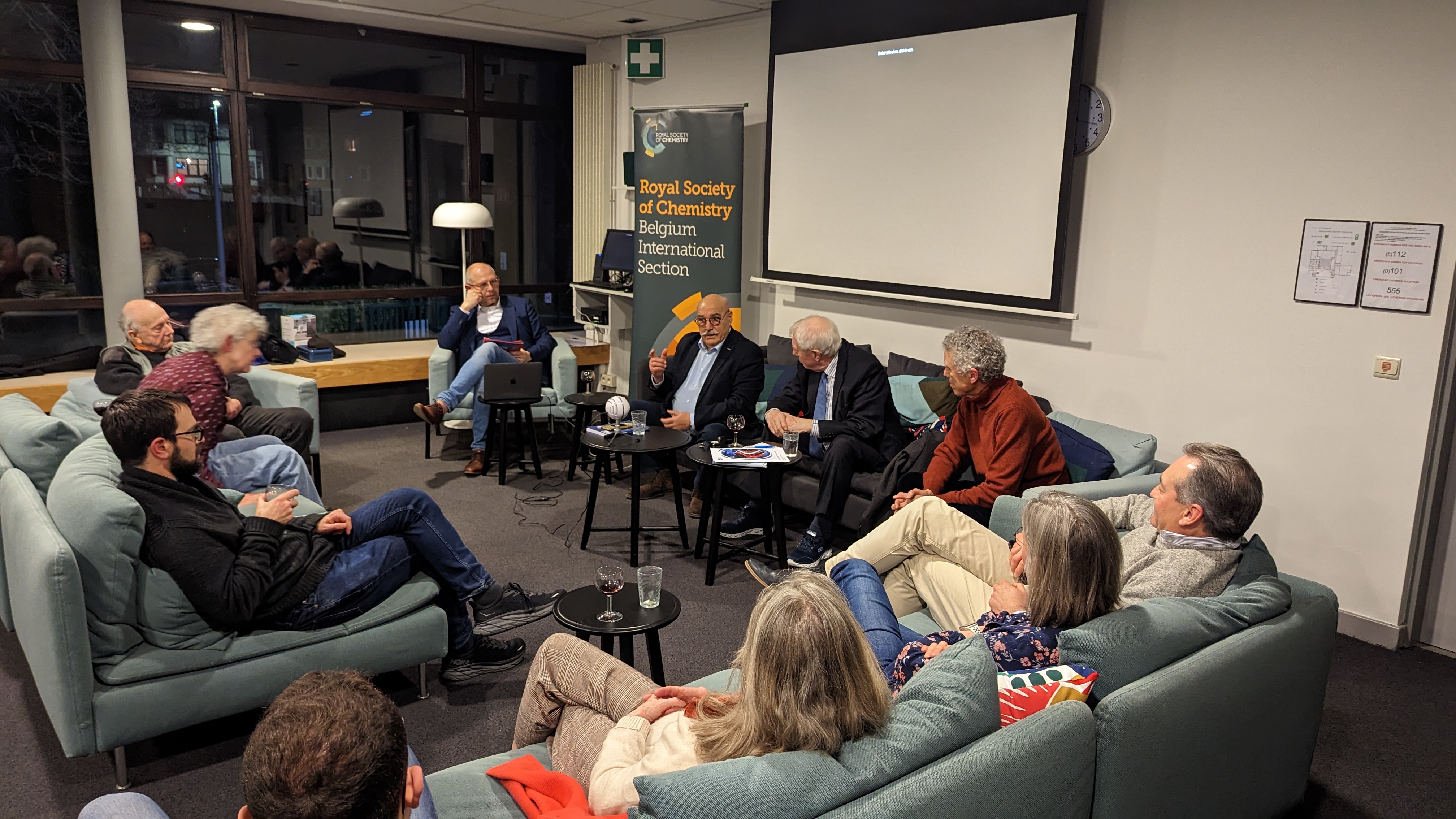
On the evening of Tuesday 30 September 2025, RSC Belgium welcomed Professor Gwenhaël de Wasseige from the Universite Catholique de Louvain to talk to us about her exciting work on neutrinos and other astronomical phenomena. Her talk was a real eye-opener to the world of new ways of observing our universe through 'multi-messenger' astronomy - in particular extremely sensitive, cutting-edge research to detect neutrinos.

Most of what we know about our Universe today comes from the observation of visible light. To improve our understanding of the numerous exotic phenomena that populate the sky, we need to enlarge the spectrum of our observations. Furthermore, adding new cosmic messengers provides extra pieces to help solve the puzzles of the universe. In the talk, Professor Gwenhaël de Wasseige reviewed the status of multi-messenger astronomy and discussed the pros and cons of each messenger to study some of the most violent events in the universe.

Professor de Wasseige is an astroparticle physicist and a member of both the IceCube and KM3NeT collaborations and her main work is focused on low-energy (MeV-GeV) neutrinos coming from transient events, such as solar flares, core-collapse supernovae, and compact binary star mergers.

The IceCube Neutrino Observatory was the first detector of its kind, designed to observe the cosmos from deep within the Antarctic ice. Encompassing a cubic kilometre of ice, IceCube searches for nearly massless subatomic particles called neutrinos. These high-energy astronomical messengers provide information to probe the most violent astrophysical sources: events like exploding stars, gamma-ray bursts, and cataclysmic phenomena involving black holes and neutron stars.

The KM3NeT collaboration is developing the next generation neutrino telescopes with telescope detector volumes between a megaton and several cubic kilometres of clear sea water. Located in the deepest parts of the Mediterranean, KM3NeT is opening a new window on our Universe including research on the properties of the elusive neutrino particles.

You can find a pdf version of Prof de Wasseige's presentation here and the work of the KN3Net project was recently featured (October 2025) in the EU's Research Magazine Horizon.

The talk took place in the Social Area above the Brel Theatre at the British School of Brussels (BSB), Tervuren and was followed by our usual social networking. 

Monday, 22 September 2025

RIP Rita

Rita Woodward (née Blakeborough)

19 June 1942 – 3 August 2025

Over the summer the section lost one of its founding members and the leading light of our work with schools in Belgium. Rita Woodward served on the RSC Belgium section committee continuously from its founding in the early 1990s until her passing. During that time, she held the office of Treasurer twice (1998-2000 and 2011– 2016) and was Chair of the section from 2001-2002. Rita had been a member of the RSC since 1964.

Rita led our work with schools for more than three decades. She devised the experiments and developed the questions for our annual Top of the Bench competitions for school teams – Belgium being the only section not based in the British Isles to send a school team to the UK finals – and also, in more recent times, developed our Chemistry Challenge initiative for individual students.

In 2010 Rita received an RSC Award for Service to recognise her outstanding support for the work of the society. Rita was presented with this prestigious award by RSC President Professor David Phillips (see above) at a glittering dinner event during the 2010 RSC's General Assembly. Previously she had been awarded an RSC Long Service award at our 2007 section AGM.

Rita was born on 19 June 1942 in Rawtenstall, Lancashire, but her early life was in Africa as her engineer father worked on developing the railways. The family spent time in West Africa before moving east, living in Uganda and eventually settling in Kenya.

She returned to the UK for secondary school, living with her grandmother in Newport, South Wales, and developed a strong interest in Chemistry. Her first job was as a research assistant at British Petroleum in Barry, South Wales where she met her life-long partner and husband Peter, whom she married in 1965.

Initially Rita did not consider university, but she followed her passion for chemistry, studying at night school for an ‘Associate of the Royal Institute of Chemistry’ (ARIC) qualification that she completed at Aston University. Rita then obtained a teaching diploma at Keele University.

In 1977, Rita, Peter and the family moved to Belgium enrolling their two sons at the British School ofBrussels (BSB). Rita also joined BSB, initially as a supply teacher, before joining the Chemistry department. She went on to become Head of Chemistry, and later Head of Science, dedicating more than 25 years to the school. Rita designed the very splendid laboratories at BSB.

Rita remained involved with the Royal Society of Chemistry, and in particular the Belgium section, throughout her adult life, and this continued into her retirement. The RSC played a central role in her and Peter’s social life, and many lasting friendships came from it.

Rita will be missed dearly and remembered always with love. For colleagues, students, and friends, she was someone who you could rely on and respect. She embraced every stage of her life with thoughtfulness, energy, and purpose. Whether through her work, her friendships, her family, or her hobbies, she gave her time and attention generously. She had a quiet determination, a steady presence, and a deep sense of responsibility to those around her.

Rita leaves husband Peter and their two sons: Jonathan and Michael.

Monday, 13 January 2025

It’s a Gas!

On the evening of Wednesday 20 November 2024, RSC Belgium welcomed well-known material scientist and broadcaster Professor Mark Miodownik from University College London to Belgium to talk to us about his new book ‘It’s a Gas’.

Subtitled ‘The Magnificent and Elusive Elements that Expand Our World’ Mark’s new book masterfully reveals an invisible world through his unique brand of scientific storytelling. Why are most gases invisible, odourless and tasteless? Why do some poison us and others make us laugh? And why do some explode while others are content just to make drinks fizzy? 

During the evening Mark took us back to those exhilarating – and often dangerous – moments when scientists were trying to work out exactly what they had discovered in the world of gases. His talk showed that gases are the formative substances of our modern world, each with its own weird and wonderful personality. Examples included how seventeenth-century laughing gas parties led to the first use of anaesthetics in surgery, and how gases made us masters of the sea (by huge steamships) and skies (via extremely flammable balloons). The talk revealed the immense importance of gases to modern civilisation.

A Financial Times Master of Science and chosen by The Times as one of the 100 most influential scientists in the UK, Mark is Professor of Materials and Society at University College London, where he is also Director of the Institute of Making. He is the author of the book Stuff Matters – a New York Times bestseller which won the Royal Society Winton Prize – and Liquid, which was shortlisted for the same prize. He presents BBC TV and radio programmes on science and engineering such as Everyday Miracles and How It Works.

The talk was in the Brel Theatre at the British School of Brussels (BSB) in Tervuren, and was followed by a networking drinks reception with Waterstones Brussels bookshop in attendance allowing members and friends to purchase signed copies of some of Mark's books and have an informal chat with him.

Mark's talk was recorded and is now available on our dedicated YouTube channel and as an embedded video below.

Top of the Bench 2024 European Eliminator

On Saturday 16 November, the Royal Society of Chemistry Belgium Section held its annual Top of The Bench (TOTB) Competition to select a team of school students to represent the section in the UK National Finals in 2025. After a tough afternoon of competition the overall winner was Team Solvay from St. Georges International School in Luxembourg.

Our TOTB competition took place in the chemistry labs at The British School of Brussels (BSB) in Tervuren with seven teams from four schools taking part. Teams Franklin and Goodenough represented the International School of Flanders (ISF), Teams Kwolek and Baekeland came from Montgomery International School (MIS), Teams Solvay and Hodgkin travelled up from St Georges, and BSB was represented by Team Curie.

Each team was composed of four students with two students from Year 9 UK (3rd year or Grade 8), one student from Year 10 UK (4th year or Grade 9), and one student from Year 11 UK (5th year or Grade 10). The competition itself was split into three parts: a 30 minute group challenge Chemistry Quiz involving creative thinking exercises; a 90 minute group practical activity; and finally age-appropriate individual multiple-choice quizzes with the students having 30-minutes to complete them.

All the teams enjoyed the competition and when the scores from the various elements were added up Team Solvay from St George’s (pictured above with RSC Belgium TOTB organiser Susan Schamp) were first with Team Curie (pictured below with Susan) from BSB second and Team Goodenough from ISF third. This year individual cups were awarded to all team members of the first and second placed teams.

Team Solvay will now be representing RSC Belgium in the UK National TOTB Final which will take place at Cardiff University on 22 March 2025.

The Cardiff competition will be the last TOTB UK Grand Final as the RSC is discontinuing the event. However, the Belgium section is looking to continue our own TOTB event, or a similar practical-orientated team competition, possibly with a modified team age profile that could help widen participation from schools in our area.

Our immense thanks to everyone who took part in the competition or were involved in the organisation of the competition. In particular to Susan who developed the competition elements with Rita Woodward and to Jonathan Norris for use of the labs at BSB.

Thursday, 5 December 2024

Iron Age weapons join the fight against Antimicrobial resistance

On the evening of Tuesday 15 October, RSC Belgium welcomed Professor Ricardo Louro who is head of the Inorganic Biochemistry and the NMR laboratory at ITQB-NOVA – an interdisciplinary research and advanced training institute of NOVA University in Lisbon, Portugal - to talk to us about antimicrobial resistance (AMR), which is an emerging concern that is threatening to burst the antibiotic bubble that has kept us largely safe from bacterial infection for nearly eight decades since the discovery of penicillin by Alexander Fleming.

It is estimated that AMR directly caused over 1.2 million deaths globally in 2019 and was a contributing factor in just under 5 million more. Without immediate global action, AMR could lead directly to over 8.2 million deaths each year by 2050 overtaking cancer as the primary cause of death.

A new global initiative to tackle AMR was launched in September this year at the United Nations General Assembly. The UN commitment aims to strengthen efforts to combat AMR and sets important targets, such as cutting global AMR-related deaths by 10% by 2030 and developing national action plans. Additional goals include reducing the use of antibiotics in agriculture and ensuring that low- and middle-income countries receive adequate financial support to fight AMR.

Professor Louro presented the problem, described current antibiotic targets and argued that scientific discoveries are uncovering new targets that have the potential to preserve our protection from bacterial infections into the future. In particular he focused on the emergence of  “Iron age weapons” that can help us to fight AMR by interfering with the iron metabolism of the target bacteria.

The talk, which took place at the British School of Brussels in Tervuren, was followed by a lively Q&A session that extended into our usual networking social event afterwards.

YouTube Video

Ricardo's excellent talk on AMR was recorded and can be found on our dedicated Youtube channel or as an embedded video below. Enjoy!


Monday, 14 October 2024

Ten Years of Norman Lloyd Scholarships Celebrated

On the evening of Tuesday 10 September RSC Belgium held a special ‘Celebration of Chemistry’ event in the Brel Theatre at the British School of Brussels (BSB) to celebrate two of our initiatives that aim to support young people studying chemistry and to deepen their interest in the chemical sciences as a career.

The event was the prize giving event for our 2024 Chemistry Challenge initiative (see separate blog for the results and prize winners) for students in their penultimate year in high school and also marked ten years of our Norman Lloyd scholarships at Cardiff University. The scholarships are awarded to a first-year student studying chemistry at Cardiff.

After the prize awards ceremony for the 2024 Chemistry Challenge RSC Belgium, Chair Professor Bob Crichton described the Norman Lloyd Scholarships and how they came about.

The scholarships were established in 2014 in memory of Dr Norman Lloyd, who was one of RSC Belgium’s founding members and an active and enthusiastic supporter of the section’s activities. The scholarship fund was established following the immense generosity of Norman’s friends, family and colleagues at Dow Corning, where he was Director of Research for Europe until his retirement in 1992. 

In consultation with Norman’s family, it was decided to approach Cardiff University to establish the Dr Norman C. Lloyd Scholarships to provide an annual scholarship of £1,000 for an undergraduate student, in their first year of study and from a relatively deprived or underrepresented background, in the Cardiff School of Chemistry.

Bob outlined Norman’s illustrious career and his many valuable contributions to the section’s activities both scientific and social.

RSC Belgium secretary Tim Reynolds then presented the ten scholars that the fund had supported from 2014 to 2024 highlighting their appreciation of the scholarship’s support and its impact on their  experience at university and beyond.

Norman’s daughter Mitchko (pictured above with Bob, Norman’s widow Setsuko. and our speaker from Cardiff, Dr Tom Tatchell) responded on behalf of the family and thanked everyone who had contributed to the fund. She felt it had been a very fitting tribute to her father.

Chemistry at Cardiff

Our main speaker at the event was Dr Tom Tatchell who is Education & Students Manager at the School of Chemistry at Cardiff University and talked about the impact of the Scholarships at Cardiff.

Tom expanded his presentation to cover the general area of chemistry and education, the current chemical sciences job market, and the changing face of chemistry with respect to future trends such as Artificial Intelligence (AI) etc. He talked about studying chemistry, how it has changed from being very “bench” focussed to now needing other complementary skills like management, business and languages.

Earlier in the day Tom had visited St Johns International School in Waterloo to talk to students about careers in and further study of the chemical sciences.

After the talks, a drinks reception was held for all attendees.

RSC Belgium Chemistry Challenge 2024 Results and Prizes

The results of the RSC Belgium Chemistry Challenge 2024 were announced at our Celebration of Chemistry event on 10 September 2024 at the British School of Brussels (BSB) in Tervuren. For the 2024 Challenge, ten schools took part (four European Schools and six International Schools) with just over 100 students participating - a very encouraging number. This year saw a very good showing from students from the International School of Brussels (ISB)

As usual, the Challenge was designed to test students’ chemical knowledge and initiative and consisted of has three sections:
  • A chemistry multiple choice paper (Section A)
  • A structured questions on chemistry (Section B), and
  • A 'Thinking Matters' paper that is not chemistry based (Section C)
The top results were as follows:

Section A - Multiple choice
First prize for this section was won jointly by Juliette Martin and Nomura Rydoi both from ISB who each received a €50 award.

It was a triple tie for second place with Joaquim Dornelas Rangel from BSB, Riddhi Narlawar from the European School at Mol (ESM) and Antoni Zielinski of ISB all winning €25 prizes, while a third prize of €10 went to Jonas Baltramaitis from the European School of Luxembourg 1 (ESL1).

Section B - Structured questions
In this section the first prize of €50 was awarded to Naomi Trevelyan-Shipp of ISB with Juliette Martin of ISB picking up the second prize of €25. The third prize of €10 was awarded to Alexandre Escardino from BSB.

Section C - Thinking Matters
The top prize in this section of €50 went to Julius Jager from the European School of Brussels 1 (EEB1). The Second prize of €25 went to Alex Gal from Montgomery International School and the third prize worth €10 was awarded to Juyoung Chang of ISB.

The Keith Price Prize
With her first prize in Section A and second place in Section B, this year's Keith Price Prize was claimed by Juliette Martin (pictured below with RSC Belgium Chair Professor Bob Crichton and Dr Susan Schamp, RSC Belgium Schools Coordinator and the question setter for this year's Chemistry Challenge), who received an additional €100 reward.


Well done to everyone who took part in this year's Chemistry Challenge! Every student that entered the competition receives a certificate of participation. And, of course, we will be running the Challenge again in 2025 and look forward to further widening participation.

Tuesday, 2 July 2024

The Future of the Chemical Sciences

On the evening of Thursday 23 May 2024 RSC Belgium was delighted to be welcome the President of the Royal Society of Chemistry, Professor Gillian Reid, to Belgium to talk to us about her research and update us on RSC activities around the world. The talk took place at the British School of Brussels in Tervuren.

Gill’s talk was entitled ‘The Future of the Chemical Sciences’. Gill Reid is a long serving member of the chemical science community and a passionate advocate for our discipline. As she nears the end of her two-year tenure as RSC President she talked about the highlights from her time as President and the opportunities she sees for the future of the chemical sciences.

Gill said that one of the many great advantages of the RSC is that our 50,000 members worldwide represented the whole breadth of the chemical science community from teachers introducing children to chemistry for the first time, to chemists in industry and academia who are pushing forward the boundaries of our discipline. This means that the RSC gets a very broad picture of the trends and issues that are shaping the future of the chemical sciences.

Gill shared what the society sees as the key opportunities for the chemical sciences and our priorities in helping the community make the most of these. There is no doubt that chemistry is a powerful catalyst for change and the impact of our chemistry community is incredible: from developing medicines, vaccines and diagnostics when the world needs them most to keeping our food and water safe, clean and in good supply; creating revolutionary technologies and materials to generate and store clean energy and, most importantly, inspiring generations of young minds, helping them forge their paths to fulfilling careers and lives.

Gill's presentation sparked a lively question and answer session with conversations continuing into the networking reception after the talk.

YouTube Video

Gill's whistle-stop tour of some of the most important areas of RSC activity was recorded and can be found on our dedicated Youtube channel or as an embedded video below. Enjoy!


Gill's Biography

Gillian Reid is Professor of Inorganic Chemistry and former Head of the Department of Chemistry at the University of Southampton. Her research involves coordination chemistry, inorganic semiconductors and metal fluoride scaffolds. In 2020, she was appointed the President-elect of the Royal Society of Chemistry, becoming President in 2022 for a two-year term.

Gill became interested in chemistry whilst at high school and studied the subject at the University of Edinburgh, where she earned her bachelor's degree in 1986. She remained there for her doctoral research on macrocyclic complexes. After her PhD, and a two-year postdoctoral research position in Edinburgh, Reid moved to a lectureship in the University of Southampton.

She was promoted to Professor in 2006 and under her leadership, Southampton joined the Knowledge Centre for Materials Chemistry. Reid leads molecular assembly and structure at the University. Her work in inorganic coordination chemistry has a particular focus on the design of macrocyclic ligands that involve chalcogen donor atoms. She makes use of non-aqueous electrodeposition to grow inorganic semiconductor alloys. Electrodeposition allows for bottom-up growth without the need for an ultra-high vacuum environment. She has also created molecular reagents that allow the synthesis of compounds for use in non-volatile memory, thermoelectric generators and two-dimensional materials.

Gill is a great believer in outreach activities and was co-founder of the Southampton Science and Engineering Day, which evolved into the Southampton Science and Engineering Festival. In 2010, Reid was made the Head of the Department of Chemistry Outreach Programme and in 2015, she co-led the Royal Society Summer Science exhibit ‘Taking Technology Smaller’, which introduced the public to electrochemistry as a means to build nanoscale electronic devices.

Wednesday, 10 April 2024

BSB at ToTB Final in Edinburgh

The 2024 Top of the Bench final took place at Edinburgh Napier University on Saturday 16th March with RSC Belgium's representative team from the British School of Brussels (BSB) taking part. The weather was rather wet and windy but the BSB team (pictured below outside Edinburgh castle), who won our eliminator round in November, thoroughly enjoyed the experience.

RSC Belgium committee member and BSB's Department Lead for Chemistry, Johnathan Norris, has sent the following report on proceedings in Edinburgh.

"The BSB team competed in the TOTB competition final at Edinburgh Napier University on the theme of "Water". The competition followed the usual format; Junior and Senior Quiz in the morning on Chemistry (our Y10/11 students had a bit of a disadvantage as some of the questions were from Triple Award rather than Double Award science) but the students felt relatively pleased with their performance.

After Lunch it was on to the experimental group task where the students had to produce a solubility curve by using different water temperatures and seeing when a solid crystallised. Whilst we were waiting for the results of the competition we were treated to a talk on "Water treatment" including a demonstration of "flocking!".

The RSC President, Gillian Reid, then gave a short talk on her varied career and how she ended up as President of the Royal Society. Unfortunately BSB were not one of the top six schools with Brighton College taking the first prize this year. 

However, the team from BSB were not too disheartened as they had been able to spend a weekend in the Scottish capital, seeing bagpipers, a double rainbow from the castle and enjoy the discovery of the delights of Marks & Spencers Percy Pigs!"
Jonathan was also able to have a chat with RSC President Gill Reid during some free time and she told him how much she was looking forward to coming to Belgium in May (see forthcoming events). In particular she is looking forward to the tram ride from Brussels to Tervuren - so let's hope it is back up and running by then!

Winners
The RSC Belgium / BSB team were one of 31 schools teams from across the UK competing in Edinburgh final. The victors were Brighton College who won a trophy, individual £25 Amazon gift vouchers and a generous £500 to bolster their school’s chemistry provision. The runners-up, from The Manchester Grammar School, were awarded a trophy and each received a £15 Amazon gift voucher. Sama Albattat from Cardiff High School received the Jacqui Clee Award for the most outstanding individual contribution.

The theme for this year’s competition was water – essential to life on Earth and a critical topic in chemistry. The competition kicked off with a 40-minute chemistry knowledge exam, where pairs of students worked together in school teams to answer a series of challenging questions. After this, groups of four students tackled an engaging 90-minute lab practical exercise.

President of the RSC, Gill Reid says the event was incredibly enjoyable, with a real buzz of anticipation. ‘It was fantastic to see the enthusiasm, determination and team work on display. I hope everyone felt proud of their achievements and inspired to continue their journey with chemistry! Thanks also to all the teachers and technical staff for their commitment to enabling the students to enjoy this experience.’

Mark Jordan, head of education at the RSC, added: ‘Our congratulations to all this year’s participants who represented their schools and a new generation of scientists so well. We’re very grateful to the staff of Edinburgh Napier University, technicians and teachers, and the RSC team for making the first final hosted in Scotland such a success.’

Edinburgh Napier University lecturer, Colin McGill shares how proud the team were to be able to host this year’s final: ‘It was great to welcome enthusiastic young chemists and their teachers from across the UK (and beyond!)’. Colin and his team worked in partnership with the RSC to organise the successful event. He extends special thanks to the events team, the technical team who organised the practical activities and more, as well as the student teachers who helped out on the day.

The Top of the Bench competition continues to inspire and challenge young scientists, offering a platform to showcase their talents and passion for chemistry. Congratulations to all the talented participants and winners.

The Top Six places are listed below with their RSC Region or section.

1st              Brighton College - Downland

2nd             The Manchester Grammar School - Manchester & District

3rd             Bradford Grammar School - Central Yorkshire

4th             Yarm School - Teesside

5th             Wellingborough School - East Midlands

6th             Mercia School - Sheffield & District

Jacqui Clee Award to Sama Albattat from Cardiff High School - South East Wales

Wednesday, 13 March 2024

Beyond COVID-19: predictions for future pandemics

On the evening of Thursday 7 March 2024 RSC Belgium member and friends were treated to a hugely informative and entertaining talk entitled 'Beyond COVID-19: predictions for future pandemics' at the British School of Brussels in Tervuren from Professor Marc Van Ranst, Professor of Virology at KULeuven and the Rega Institute for Medical Research. Marc was a very prominent figure in the Belgian media during the COVID-19 pandemic.


In 2007, Marc (pictured above with RSC Belgium chair Bob Crichton) had been appointed as Interministerial commissioner by the Belgian federal government to prepare Belgium for an influenza pandemic and in 2009 he was an interministerial commissary for crisis management during the Mexican flu pandemic. During the COVID-19 pandemic, Marc was a member of both the Belgian 'Risk Assessment Group' (RAG), which analysed the risks of coronavirus SARS-CoV-2 for public health, and of the 'Scientific committee Coronavirus' which advised Belgian health authorities on combatting the virus and which made - and continues to make - prognoses on its evolution and spread in Belgium.

The emergence of future pandemics is an important concern, given the unpredictability observed in past outbreaks. While pandemics are rare events, several quasi-certitudes can guide our predictions Marc said. There is a high likelihood that the next pandemic may originate in Asia, particularly in densely populated urban centres. The role of air travel in facilitating the rapid spread of infectious diseases cannot be underestimated. Furthermore, zoonotic transmission, where diseases jump from animals to humans, remains a significant risk factor for future pandemics. The likelihood that a next pandemic will be caused by a rapidly mutating RNA virus is also very high.

The mode of transmission through respiratory droplets will be a key factor to consider when preparing for and responding to future global health crises.

By exploring these predictions and understanding the commonalities among past pandemics, Marc was able to show how we can be better equipped to mitigate risks, enhance preparedness strategies, and safeguard global health security in the face of future infectious disease threats.

Marc indicated that the actual global death toll from the COVID pandemic was of the order of  22 million compared to the official recorded global toll of 6.5 million. He also showed, via data on COVID in wastewater, that the virus was very much still with us during winter 2023-24, with current variants being highly transmissible but not causing such serious infection in terms of admissions to intensive care and mortality. 

The development and deployment of effective vaccines had been key to limiting serious infections and death: the difference in mortality between states in the US which encouraged and enabled vaccination and those that were less enthusiastic was clear. 

Marc also described his personal experiences in the face of antivax campaigners - a most disturbing situation that brought threats of physical violence against him and his family quite literally to his doorstep and at one point required his family to go into close police protection.  

Marc's conclusion was also just as disturbing - that we are not ready for the next, inevitable, pandemic. 

Marc's presentation can be viewed below.


Wednesday, 3 January 2024

BSB win RSC Belgium's TOTB 2023

On Saturday 18 November, the 2023 RSC Belgium Top of the Bench (TOTB) regional heat was held at the British School of Brussels (BSB). Teams from BSB, the International School of Flanders (ISF) and St. Johns International School (St Johns) participated in the competition to represent Belgium at the UK final.

The TOTB heat 'kicked off' at 13h30. This year the contest was in three parts and was devised by RSC committee members Susan Schamp and Rita Woodward. The initial task was a group challenge involving a 30-minute written Chemistry Quiz involving creative thinking exercises. All group members worked together on this activity.

After a short break the main group practical activity took place. This was a 90-minute hands-on Chemistry Investigation.

Finally, after a longer break with some refreshments, the individual team members undertook a further 30-minute, multiple choice, age-appropriate written Chemistry Quiz. Each four-person TOTB team consists of two students from Year 9 (Grade 8), one student from Year 10 (Grade 9) and one student from Year 11 (Grade 10). The Year 9 students completed one quiz and the Year 10 and 11 students completed a second quiz.

Joining Rita and Susan in observing and judging the event were Olivier Schamp and RSC Belgium Chair Bob Crichton with section secretary, Tim Reynolds, also there to take the photos. Also present throughout the day were RSC committee member and Head of Chemistry at BSB, Jonathan Norris, RSC committee member and Head of Chemistry at St. Johns, Julie Tuppeny, and chemistry teacher Beatriz Rocha from ISF.

A close result

The competition was extremely keen and it was a very tight contest. In terms of determining the final winner of the event, the weightings for the three components were: Group Challenge – 20%, Practical Activity – 50%, and Multiple Choice – 30%.

After an extensive consultation by the judging panel, Team Baekeland from BSB were declared the winners and received the coveted Keith Price Cup (see below - the team are pictured with, from left to right, Rita Woodward, Susan Schamp, Bob Crichton and Olivier Schamp).

The Baekeland team will now represent the Belgium section at the UK National finals of TOTB that will be held on Saturday 16 March 2024 at Edinburgh Napier University. We wish them the best!

Our thanks as ever to Susan and Rita for developing the written and practical tasks for our Top of the Bench event and all the teams for their enthusiasm and hard work. Congratulations to the winners and everyone who took part.

Chemistry with Potential

On the evening of Thursday 12 October RSC Belgium welcomed Prof. Kevin Lam from The University of Greenwich back to Belgium to give a talk entitled: ‘Electrifying the Pharmaceutical Industry without the BANG! When Your Chemistry has got Potential’. Professor Lam was awarded his PhD at the Universite Catholique de Louvain under the supervision of our old friend Istvan Marko and explored the use of electrochemistry and photochemistry as green alternatives to activate organic molecules. This work resulted in the development of a new radical-based deoxygenation reaction (the Lam-Marko reaction).

Synthetic organic electrochemistry has its roots in the classic work of Faraday and Kolbe on the electrolysis of aliphatic carboxylic acids. Although numerous transformations have been developed since then, many of which have been successfully applied in various industrial processes, the potential of preparative organic electrochemistry remains underestimated. However, the growing impetus to find greener and more cost-effective alternatives to traditional synthetic methods has recently led to the development of novel electrosynthetic methods.

In his talk Kevin presented new, safe, green, affordable and efficient ways to generate highly reactive organic intermediates such as iso(thio)cyanates, isocyanides, orthoesters or even diazo compounds. He also discussed the scale-up of these processes using flow electrosynthesis to demonstrate their real-world application in the pharmaceutical industry by reviewing case studies carried out with pharma giants including GSK, AstraZeneca and Johnson & Johnson.

The venue for this event was the Brel Theatre at the British School of Brussels (BSB) in Tervuren.

Youtube video

Kevin's talk was recorded and can be found on our dedicated Youtube channel or as an embedded video below. Enjoy!


Hydrogen as an Energy Vector

On the evening of Wednesday 22 November 2024 the section welcomed Alexandra Kostereva from the European Gas Research Group (GERG) to talk to us about the use of ‘Hydrogen as an Energy Vector'. As usual the talk was hosted by the British School of Brussels in Tervuren.

Alexandra is Operations Manager at GERG based in Brussels and her talk introduced the relevance of hydrogen as an energy vector, and present a major project that GERG and partners have finalised this year: THyGA (Testing Hydrogen admixture for Gas Applications​). This project looked at the impact of hydrogen/ natural gas blends on commercial and domestic appliances. It included a large testing programme with end-use appliances, and provided conclusions for future regulation and standardisation of this sector. Alexandra also outlined other aspects of the work of the European Gas Research Group in the energy sector.

Biography

Alexandra joined the European Gas Research Group (GERG) team in 2019 and has been actively involved in the full portfolio of its research activities including work on hydrogen, LNG, biomethane, and methane emissions topics. She has worked on several European-funded projects. In 2020, Alexandra completed a Blue Book internship at the European Commission’s DG Energy working on the European Methane Emissions Strategy.

Alexandra has a Master’s degree in Engineering from the French Grande Ecole Centrale Lille, with a specialisation in Energy, and a Master’s degree in Economics of Energy from Université Paris-Saclay.

YouTube Video

Alexandra's talk was recorded and can be found on our dedicated Youtube channel or as an embedded video below. Enjoy!


Friday, 2 June 2023

New Horizons in synthesis: click chemistry and beyond

On the evening of Thursday 20 April from 19h30 RSC Belgium welcomed Professor Ari Koskinen, Emeritus Professor of Organic Chemistry at Aalto University, Finland to talk to us about ‘New Horizons in synthesis: click chemistry and beyond’. The event was held at the British School of Brussels in Tervuren and was followed by an opportunity for RSC members and friends to network and ask informal questions of the speaker over drinks and snacks.

A central feature of chemistry is to produce novel connections between atoms, in other words chemical synthesis. The state of the art of organic chemical synthesis is defined by the complexity of the target structures one can produce in an efficient manner. Especially during the past two decades, different economies of synthesis have taken a central role in the development of synthetic chemical strategies. Thus atom economy, step economy, redox economy are valid targets for synthesis research.

‘Click chemistry’ and biorthogonal chemistry are timely subjects and Ari took us through a brief history of organic synthesis and introduced us to the latest trends in this important part of chemistry. 

The 2022 Nobel Prize in Chemistry was awarded to Carolyn Bertozzi, Morten Meldal, and Barry Sharpless for the development of click chemistry and bioorthogonal chemistry.

As usual, the session was recorded and you can access it direct via the RSC YouTube channel here or via the embedded video below.

Our speaker

Professor Ari Koskinen (pictured below) received his M.Sc. (Chem. Eng.) in 1979, his Licentiate in Technology in 1982 and his Doctor of Technology in 1983 from the Helsinki University of Technology.

After postdoctoral studies at the University of California, Berkeley he accepted an appointment as a Project Leader in New Drug Development at Orion Corporation – Fermion, Finland where his research group was among the first in Scandinavia to adopt computer aided drug design as well as computerized database handling protocols in new lead identification. Returning to academia, he joined the University of Surrey as a lecturer in 1989 and was then appointed as Professor of Chemistry (especially Synthetic Organic Chemistry) at the University of Oulu, Finland in 1992, and transferred to the Helsinki University of Technology in 1999 (Aalto University since 2010) as Professor of Organic Chemistry.

Prof. Koskinen is a member of the Finnish Academy of Sciences and Letters since 2003. He is the author or co-author of some 190 publications, 15 patents and three books. He retired from active academic work in October 2021, but as emeritus professor, he keeps his finger on the pulse of organic chemistry through activities in IUPAC (Division of Organic and Biomolecular Chemistry) and EuChemS (secretary, Division of Organic Chemistry).


Monday, 17 April 2023

Catalyzing the road to sustainable e-fuels

On the evening of Thursday 23 March 2023 RSC Belgium welcomed Professor Damien Debecker from UCLouvain to the British School of Brussels in Tervuren to talk about ’CO2 and H2: catalyzing the road to sustainable e-fuels?’ Professor Damien Debecker is a professor within the Faculty of bio-science engineering at UCLouvain and is currently holder of a Francqui Research Professor chair.

As we all know the mitigation of net CO2 emissions is currently an absolute priority challenge for society for which various strategies must be implemented in parallel. One useful technology, which falls under the umbrella of the Carbon Capture and Utilization (CCU) concept relies on the catalytic hydrogenation of CO2 to methane, methanol, or higher hydrocarbons.

When methane is targeted, this process is called methanation or the Sabatier reaction. Prof Debecker took us through recent developments in the design of highly active methanation catalysts and then placed these developments in a more general context, questioning the sourcing of both CO2 and H2 and highlighting the fundamental role of renewable electricity in so-called sustainable processes.

The talk covered a number of issues relating to sustainable chemical processes, future energy production and the sense (or non sense) of certain proposed solutions. A lively Q&A session follwoed teh talk and continued during moe informal networking afterwards.

The session was recorded and you can access it direct via the RSC YouTube channel here or via the embedded video below.


Friday, 14 April 2023

BSB at Top of the Bench Final

Our 2022 Belgium Top of the Bench champs – Team Sodium from the British School of Brussels (BSB) – competed in the Royal Society of Chemistry’s 2023 Top of the Bench national final on 25 March at the University of East London (UEL). The BSB team were the only non-UK team in the 31 competitors. The competition tests the chemistry knowledge of 14–16 year-old students through written and practical exercises.

Students had to complete a 40-minute chemistry knowledge exam in pairs, followed by a 90 minute hour practical team exercise in UEL’s labs. The theme of the final was sustainability with a practical challenge on sustainable energy that included a calorimetry task, density determination and finally an analysis of some possible “future fuels”. 

The teams also had a talk from Tony Raynham, the course leader for the University of East London Chemistry department, about the course (a new course only just set-up), his life history and journey about how he got to where he is now and then a talk on apprenticeships from an RSC speaker. 

Tony Raynham said that UEL was delighted to host the talented young chemists in the Bioscience department.

Unfortunately, BSB did not win; Winchester College (winning team pictured above) took top place. The winning team received a trophy and Amazon gift vouchers, and will be sent £500 for their school to spend on science equipment. The first runners-up, four students from Colchester County High School for Girls, received Amazon vouchers. Hannah Addiscott from The Grange School was awarded the Jacqui Clee Award for the most outstanding individual contribution.

BSB chemistry teacher and RSC Belgium committee member Jonathan Norris escorted the BSB party and commented: “The students really enjoyed themselves, despite a long day.” The BSB team made the trip to and from London in a day.

Despite not winning all the students came away with a free t-shirt and a periodic table and the accompanying teachers got a thermochromic mug, a RSC lanyard, and a fetching RSC tote bag.

Next year’s final will be in Edinburgh and RSC Belgium will be planning to send a team as usual.

Friday, 17 February 2023

How to make Urban Transport more Sustainable?

On the evening of Thursday 9 February 2023 the section kicked off its 2023 programme of events with a Café Chimique on 'Sustainable Transport' at the British School of Brussels in Tervuren. 

For our society,  one of the greatest challenges is to plan and invest wisely for sustainable transport. Transport plays a crucial role in economic development by providing access for people to education, markets, employment, recreation, health care and other key services not to mention enabling the movement of goods. Enhancing mobility for all parts of society is one of the most important preconditions for achieving economic, environmental and social goals.

In reality, transportation systems in most urban areas are far from ideal. Motorised modes still dominate and traffic congestion is ubiquitous making a significant impact on local and national GDP, degrading the urban environment and affecting citizens’ health and quality of life.

What are the solutions? What does a sustainable transport system look like? How can it be achieved? How will it be fuelled? What new or existing technologies are needed to make such systems happen? Where can the chemical sciences help? And what else is needed in terms of cultural or behavioural change by citizens?

For the debate RSC Belgium members and friends were joined by two speakers to (hopefully) find some answers to these questions and more. Section chair Prof Bob Crichton introduced the two speakers.

Prof Samuel Furfari is a recognized authority on energy policy based in Brussels. Following a 36 year career with the European Commission's DG Energy, he was appointed as a professor of geopolitics of energy at various universities including at the Université Libre de Bruxelles. He is President of the European Society of Engineers and Industrialists.

After 21 years at the UK Transport Research Laboratory, Paul Kompfner moved onto the European stage in 1992, to help set up Europe's first multi-sector partnership for deployment of intelligent mobility. Now independent following 25 years at ERTICO-ITS Europe, he is working with various projects to promote sustainable mobility of people and goods in cities

Our two speakers provided short introductory talks that was followed by an audience led Q&A discussion. As with our previous Cafe Chimiques the audience will be seated in a relaxed café-style format and a gratis bar and snacks were throughout  the evening. 

The presentations and debate were recorded is now available via our YouTube channel or below. Enjoy!

Monday, 23 January 2023

Top of the Bench back in-person for 2022

On Saturday 17 December, RSC Belgium was able to hold our first in-person Top of the Bench (TOTB) regional heat for a few years. The heat was held later in the year than normal, which meant that just two schools were able to take part. But both the British School of Brussels (BSB) and St. Georges International School from Luxembourg were able to field two teams each to compete on the day for a very tight competition.

BSB were on home 'turf' as the event was held in the chemistry laboratories at the school in Tervuren. St. Georges travelled up from Luxembourg on the day arriving in good time for 'kick off' at 13h30.

This year the first part of the competition was an 'Escape Room Challenge' quiz devised by RSC Belgium Committee member Susan Schamp. This was a bit of an icebreaker and definitely a teambuilding effort. Each team had to solve a chain of clues with the first team to ‘escape’ deemed the winner.

After refreshments the second element of the day was the Practical Activity Challenge in which team members needed to make some strategic choices, carry out experiments, process observations and relate their findings to a potential application of recycling a metal. The practical element was, as ever, devised by RSC Committee member Rita Woodward.

Joining Rita and Susan in observing and judging the event were Tim Reynolds and Olivier Schamp (pictured above). RSC teaching staff was represented by Jonathan Norris and St. Georges teachers present throughout the day were Kayleigh van Dongen and Marco Macedo Foz.

A close result

The competition was extremely keen and a very tight contest was eventually won by Team Sodium from the British School of Brussels. In second place was Team Fluorine from St Georges with their Copper team taking 'bronze' position. Team Iodine from BSB was not far behind in fourth.

BSB's Team Sodium won the coveted Keith Price Cup (see above) and will now represent Belgium section at the National finals of TOTB that will be held on Saturday 25 March 2023 at the University of East London. The theme of this event will be Sustainable Energy.

Our thanks as ever to Rita and Susan for developing the written and practical tasks for our Top of the Bench event and all the teams for their enthusiasm and hard work. Congratulation to the winners and everyone who took part.

Monday, 9 January 2023

The Magic of Miniature Molecular Machines

On the evening of Thursday 24 November RSC Belgium welcomed back Professor David Leigh from University of Manchester to talk about ‘Making the tiniest Machines’ with some extraordinary chemistry and also a few marvellous magic tricks! David is not only a skilled research leader and presenter but also a member of his local Magic Circle so we were treated to a highly informative and entertaining evening. The talk was hosted at the British School of Brussels in Tervuren and was also online.

According to the 2016 Nobel Prize in Chemistry Committee “We are at the dawn of a new industrial revolution of the twenty-first century, and the future will show how molecular machinery can become an integral part of our lives. The advances made have also led to the first steps towards creating truly programmable machines, and it can be envisaged that molecular robotics will be one of the next major scientific areas.”

In his highly entertaining talk David took us through much of the research that led to that statement and the award of the Chemistry Nobel Prize in 2016 to Jean-Pierre Sauvage, Sir Fraser Stoddart and Ben Feringa "for the design and synthesis of molecular machines"

Molecular motion

In recent years, some of the first examples of synthetic molecular level machines and motors—all be they primitive by biological standards—have been developed. These molecules are often best designed to work through statistical mechanisms, rectifying random thermal motion through ratchet mechanisms in a manner reminiscent of Maxwell’s Demon. The first programmable systems have been introduced: the forerunners of a new technological era of molecular robotics.

Perhaps the best way to appreciate the technological potential of controlled molecular-level motion is to recognise that nanomotors and molecular-level machines lie at the heart of every significant biological process. Over billions of years of evolution Nature has not repeatedly chosen this solution for achieving complex task performance without good reason. In stark contrast to biology, none of mankind’s fantastic myriad of present day technologies exploit controlled molecular-level motion in any way at all: every catalyst, every material, every plastic, every pharmaceutical, every chemical reagent, all function exclusively through their static or equilibrium dynamic properties. When we learn how to build artificial structures that can control and exploit molecular level motion, and interface their effects directly with other molecular-level substructures and the outside world, it will potentially impact on every aspect of functional molecule and materials design. An improved understanding of physics and biology will surely follow.

You can find out much more about David’s research group and their work (including the recent ‘Tape reading rachet’ paper in Nature and numerous informative video) on their dedicated website. And you can also view a pdf version of David's presentation here.

Tuesday, 25 October 2022

Chemistry Challenge 2022 results announced

The results of the RSC Belgium Chemistry Challenge 2022 were announced at our event on 29 September with Prof Vincent Lemaitre at the British School of Brussels (BSB) in Tervuren. As for the previous two years, this year's Chemistry Challenge was undertaken as a virtual event in the early summer with the students working remotely at their schools.

For the 2022 Challenge, we received entries from the majority of our group of international and European schools in the Brussels area and beyond and, as ever, the Challenge was designed to test the student's chemical knowledge and initiative. In total entries for 2022 were significantly up on 2021.

The RSC Belgium Chemical Challenge has three sections:

  • A chemistry multiple choice paper (Section A)
  • A structured questions on chemistry (Section B), and
  • A 'Thinking Matters' paper that is not chemistry based (Section C)

The top results were as follows:

Section A - Multiple choice

First prize for this section was won by Olivia Brenninkmeijer from the Antwerp International School (AIS), pictured below, who received a €50 award.

In second place was Giorgia Lucrezia la Cognata from the European School in Mol (ESMol) who won €25 and the third prize of €10 went to Zeynep Ozel of BSB.

Section B - Structured questions

In this section the first prize of €50 was awarded to Kiara Kuralla of BSB with Matei Slavnicu from St.Johns International School (St John’s) picking up the second prize of €25. Two third prizes of €10 were awarded to Siena Ootes of the European School 1 in Luxembourg (ESL1) and Zeynep Ozel of BSB.

Section C - Thinking Matters

For this section the top prize of €50 went to Kheya Sinha of BSB, with BSB's Kalvin Biggs picking up a second prize of €25. Four third places worth €10 were awarded to Simon Guisset and Philipp Weisser of ESL1 and Kiara Kuralla and Naomi Copner from BSB.

The Keith Price Prize

With an outstanding performances in Section B, and receiving an additional €100, this year's Keith Price Prize was claimed by Kiara Kuralla of BSB (pictured below on the far right with some other BSB winners - from left to right Kalvin Biggs, Kheya Sinha, Naomi Copner, Zeynep Ozel and Kiara). 

Well done to everyone who took part in this year's Chemistry Challenge! Every student that entered the competition receives a certificate of participation (see pic from ESL1 below). And, of course, we will be running the Challenge again in 2023 and look forward to further widening participation!