Showing posts with label rsc. Show all posts

Thursday, 22 July 2021

RSC’s Chemists’ Community Fund

RSC members across Belgium should have received an email from Anna Dearden, the Chemists’ Community Fund Manager at the society. On behalf of the RSC, she extended thoughts and sympathy for everyone affected by the recent extreme weather and flooding across the country and reminded members of the support available from the Chemists’ Community Fund, the benevolent fund for RSC members. 

If you or your family have suffered a negative financial impact due to recent flooding in Belgium, then please consider contacting the service. Although the RSC may only be able to offer limited immediate practical support, the CCF may be able to offer financial assistance to RSC members.

To contact the fund, you can call on +44 (0)1223 853549 or email ccfund@rsc.org. The RSC’s specialist caseworkers can talk you through the application process and may also be able to direct you to additional avenues of support. And any discussions, of course, are completely confidential.

Help and advice

The RSC’s CCF offers impartial guidance, helpful connections and support you can count on. It is part of the benefits of Royal Society of Chemistry membership and allows members to access advice, information and financial assistance whenever the unexpected occurs.

When life feels uncertain, the RSC CCF’s knowledgeable team and network of member volunteers can help guide you, offering confidential help that is as unique as the situation you face.

The service covers pretty much all areas of life including money and advice (Financial assistance, accessing state benefits, budgeting and debt, and confidential legal advice); wellbeing and family (Care and carer support, your mental health, autism support at home, and health and wellbeing resources) and employment and study issues (Job hunting and career advice, supporting work and study, and financial help and grants).

The fund is there to support those members impacted by unexpected life events. The fund is currently looking at what the longer term impact of the COVID pandemic may be on individuals and how it can better offer support not just now but into the future.

You can learn more about the RSC’s Chemists’ Community Fund in this video.


Saturday, 4 May 2019

BSB represent Belgium in TOTB Final in Birmingham

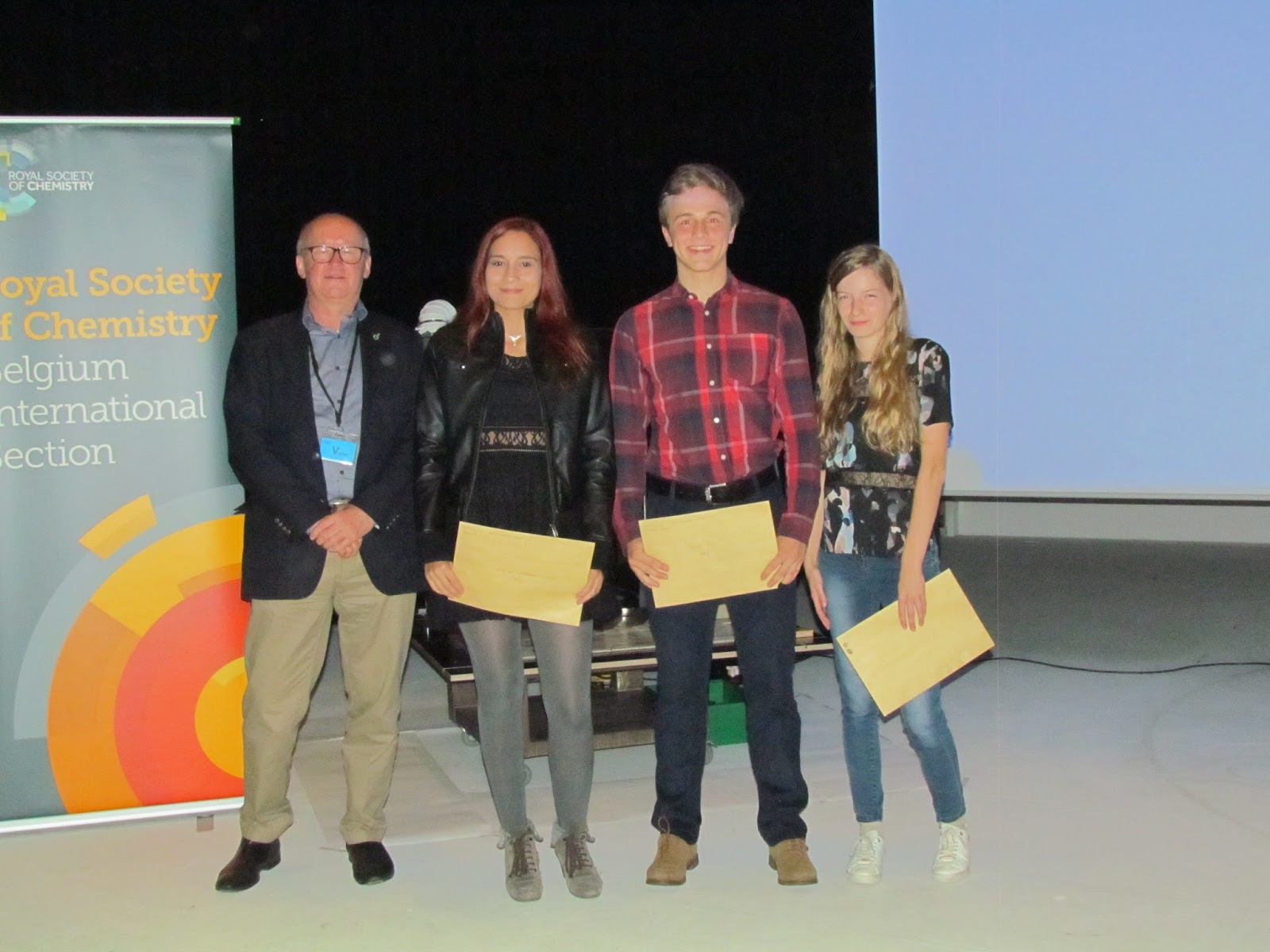
On Saturday 9 March, four students from the British School of Brussels (BSB) represented Belgium at the RSC's National Final of the Top of The Bench (TOTB) competition at Birmingham University. BSB were the winners of our hotly contested eliminator that took place in November.

The annual Final event, organised by the Royal Society of Chemistry (RSC), is designed to enthuse and excite children with Chemistry and encourage them to consider further education and careers within Chemistry. The Top of the Bench competition is one of the longest-standing activities organised by the RSC for school students and has been running for more than 20 years.


Sabina (Year 11), YiIlin (Year 10), Mathieu (Year 9) and Xavier (Year 9) from BSB took part in a series of individual and group tasks alongside 31 other schools from across the United Kingdom.


After an individual written test in the morning, the students were assessed in the afternoon during a group problem-solving exercise. This practical task took place in the brand new, state-of-the-art Chemistry laboratory of the University of Birmingham where the students were able to access fantastic facilities only normally found in industrial chemical laboratories. The day ended with a fun and informative lecture on polymers and biopolymers. The students had a look around the campus and enjoyed working in state of the art facilities in Birmingham and thoroughly enjoyed this day in a world class institution.

Tuesday, 16 April 2019

Shape and Form in Biology

On the evening of Thursday 14 March 2019, new section chairman Prof Bob Crichton gave the  opening talk of our 2019 programme with a description of the progress made in elucidating 'Shape and Form in Biology' at the British School of Brussels (BSB).

The shape and form of biological objects has long intrigued scientists, particularly in how they determine biological function. The world of structural biology has been dramatically changed in the last few years with the advent of new developments in electron microscopy and crystallography of biological macromolecules.


Bob's lecture outlined recent advances in two areas - cryo-electron microscopy (the 2017 Nobel Prize for Chemistry was awarded to Jacques Dubochet, Joachim Frank and Richard Henderson "for developing cryo-electron microscopy for the high-resolution structure determination of biomolecules in solution”) and the use of X-ray free electron lasers (the EUR 1.25 billion XFEL at the Deutsche Electronische Synchotron in Hamburg has just come on beam), supplementing existing synchrotron facilities for protein structure determination. This enables structure determination from nanocrystals, thereby overcoming some of the biggest hurdles of traditional crystallography (radiation damage) through the principle of diffraction-before-destruction, as well as simultaneously opening a new era of time-resolved (femtosecond) structural studies.

The section is organising a trip to the XFEL facility and the neighbouring DESY synchrotron in Hamburg on 28 June. Find out more here.

Prof Robert (Bob) Crichton has had a long and distinguished career in biochemical research. He graduated in Biochemistry from the University of Glasgow, Scotland, in the mid-sixties and after carrying out postdoctoral research at the Max Plank Institut für Biochimie in Munich, Germany, he moved to the Université Catholique de Louvain, Belgium in 1973, where he has been a professor of Biochemistry in the Department of Chemistry. His main research interests are in the inorganic biochemistry of iron and related metals and he is author of the book on iron metabolism -  'Iron Metabolism: From Molecular Mechanisms to Clinical Consequences.'

Of course, Bob has also been a mainstay of the RSC Belgium section for many years, giving one of its first ever talks and he has just started his third stint as Chairman of the section.

Process waste water oxidation

On the evening of Tuesday 9 April, our second talk of 2019 took place at St. Johns International School with Raf Dewil who is Professor at the Process and Environmental Technology Lab (PETLab) at KU Leuven. PETLab is a research group within the Chemical Engineering Department at KU Leuven based at the Campus de Nayer site north of Mechelen. The title of Raf's talk was 'Advanced oxidation processes: from the lab to a Chemical Plant-on-a-Truck' and dealt with the various methods to treat on-site hazardous water generated by various industrial and chemical processes.

Over the past ten years, the PETLab group has established a broad expertise in resource recovery and the production of renewable chemicals and energy carriers from waste, side and biomass streams and it specialises in waste- and wastewater treatment processes, mixed-culture microbial processes, chemicals from low-cost feedstocks, and model-based optimisation of processes.


Within their facilities at the KU Leuven Campus de Nayer, PETLab combines a broad range of analytical equipment with extensive lab- and pilot-equipment. With numerous industrial collaborations, PETLab aims at combining fundamental knowledge with a hands-on philosophy to tackle real-life problems that industry is confronted with. 

Raf's talk focused on a range of oxidation methods for the degradation of organics from hazardous wastewater streams and how laboratory work is scaled up to full sized units including an innovative modular system that combines chemical and biological oxidation treatments.

Raf's talk ended with a video outlining the 'Plant on a Truck’ concept operating at Janssen Pharmaceutica’s chemical production site in Geel. that treats process waters from the production of active pharmaceutical ingredients in a cost-effective and sustainable way.

Prof Dewil is also Editor-in-Chief of the Journal of Environmental Management and his main research interests span advanced biological and chemical wastewater treatment, advanced Oxidation Processes (AOP), sludge treatment and disposal, anaerobic digestion processes, and production of renewable chemicals from biomass and waste.

Thursday, 18 October 2018

A Kind of Blue

On the evening of Wednesday 17 October, RSC Belgium welcomed science and art fans to the Performing Arts Centre at St. Johns International School in Waterloo to hear from David Dobson, Professor of Earth Materials at University College London (UCL). The subject was  'Blue'.

The colour blue has been the rarest and most expensive pigment, for centuries reserved  for emperors and gods. Even today modern blue pigments command a premium and finding a good all-round blue is an ongoing area of research.  Blue minerals are very rare - the commonest colour-producing element, iron, normally makes greens, yellow and reds. As a consequence, this was the available pallet for most of human history, but with increased travel in the late Middle Ages and the development of synthetic technologies at various times in our history blue became available to the richest patrons. 


David (pictured above) discussed the history and technology of blue pigments in western art, from pre-Roman right through to the 21st century with a couple of chemical demonstrations to illustrate particular points.  He also described his work to develop a new blue modelled on the mineral structures which exist 500 kilometres deep beneath our feet. 

Scientist and artist
David's scientific career, working with colleagues at UCL and the Bayerisches Geoinstitut in Bayreuth Germany, involves very high- pressure experiments on deep Earth materials; the synthesis and properties of new iron-alloy phases relevant to the Earth’s core; transport properties of mantle mineral rocks and minerals; and deep seismicity.


In January 2017 David also became the first ‘Scientist in Residence’ at the Slade School of Art in London being based within the school for one year. The residency was a result of an ongoing Materials Research Project at the Slade, which highlights the role of materials within the creative and artistic process and The Pigment Timeline - a collaborative, cross-disciplinary research project that investigates and establishes connections across all departments at UCL that involve pigment and colour in any aspect of their research.

David's talk was particularly thought provoking and raised many questions from an audience on aspects of science and art. David is also an engraver and mountaineer and you can find images covering all his enthusiasms at: https://www.instagram.com/m3m_works/ 

Wednesday, 4 April 2018

CRISPR-Cas9 gene editing technology

Our 2017-18 programme continued on Thursday 22 March with a fascinating insight into the CRISPR-Cas9 gene editing technology with Prof Bernard Hallet from the Universite Catholique de Louvain in his talk: 'Genome Editing by CRISPR-CAS9: Turning a Bacterial Trick into a Biotechnology Revolution”.

Prof Hallet (pictured below) described the biological and chemical basis of the CRISPR (Clustered Regularly Interspaced Short Palindromic Repeats) technique and how the development of targeted genome editing systems, such as CRISPR, and their applications has moved forward enormously in the last decade.  In the last five years the field has undergone a quantum leap with the introduction of CRISPR-Cas9, the bacterial immune system which can be used to edit genomes on demand.

Bernard outlined how this serendipitous discovery that bacteria contained DNA sequences which were repeated, and interspersed with unique sequences, latterly identified as viral DNA, derived from viruses that had previously infected the bacteria.


It was then found that close to the CRISPR sequences, genes were located coding for CRISPR-associated proteins (Cas), which have nuclease activity. Together with small guide RNAs (crRNAs) which have been transcribed from the CRISPR locus, one or more Cas proteins form ribonucleoprotein targeting complexes, with each contain a single guide sequence. The Cas nuclease (usually Cas9) then cleaves the target DNA, marked for degradation by base-pairing with the crRNA.

In 2012, Emmanuelle Charpentier and Jennifer Doudna proposed that the CRISPR-Cas9 system could be used for programmable gene editing, an idea that has since been further developed by many research groups for potential applications ranging from creating smart model systems for fundamental protein research to enabling bio-engineers to modify crops and farm animals, and translational scientists to develop novel treatment approaches for inherited and acquired disorders for which curative treatment options are not currently available.


This fabulous CRISPR-Cas9 story provides the perfect example of how basic bacterial research has moved the whole scientific community towards the next biotechnological revolution and sparked an extended Q and A after the talk itself.

Charpentier at Louvain-la-Neuve
The title Doctors Honoris Causa will be awarded by the Universite Catholique de Louvain to Prof  Emmanuelle Charpentier of the Max Planck Institute for Infection Biology, Berlin, Germany for her discovery of the CRISPR/Cas9 genome editing system and to Prof Malcolm Bennett University of Nottingham, United Kingdom for his work on the root system of plants at a ceremony on 18 April.

The ceremony will take place at the UCL campus of Louvain-la-Neuve (Life Sciences Institute, ISV) on Wednesday April 18. For more information on this event and to register visit the UCL-ISV website.

Thursday, 1 February 2018

Jessica: our Third Norman Lloyd Scholar

Jessica Powell,  the third recipient of the Dr Norman C. Lloyd Scholarship at Cardiff University, has finished her first year at the university in 2017. Jessica (pictured below), who hails from Llandovery, was interviewed by Cardiff University’s Development and Alumni Relations office at the end of the year.


What degree are you undertaking and why did you choose the course here?
I am currently undertaking a masters in chemistry at Cardiff University, I chose the course here because of the high-level facilities and teaching available.

What’s the best thing about studying at Cardiff?
The best thing about studying in Cardiff is all of the opportunities that are made available to you throughout your degree, which allow you to broaden your knowledge and build skills that will be useful in the future.

Do you have a particular career in mind after you graduate?
After I finish my degree in Cardiff I am hoping to join the army as an officer, where I know that the analytical, problem solving and presentation skills, which I have developed during my degree will be of great use to me. 

What’s was your favourite module during your first year of study?
During my first year of study my favourite module was the foundations of physical chemistry, the module presented the key mathematical and physical background to explain the fundamentals of physical chemistry.

Do you have any hobbies outside of studying?
Outside of studying I play netball for the chemistry netball team in the IMG league, and I also take part in rifle shooting, in which I competed at a national level, representing Wales at a senior level over the summer.

What difference has this scholarship made to you?
The scholarship has allowed me to gain access to a wider range of textbooks and resources which helped me greatly during my first year, and will continue to assist my studies during the remainder of my course.

If you could say something to the donor who gave you this gift, what would it be?
I would like to thank the family of Dr Lloyd and the Royal Society of Chemistry in Belgium for this scholarship, it allowed me to excel in my first year of studying chemistry at Cardiff university, and further allowed me to gain a more in depth knowledge of all aspects of this course. 

We wish Jessica all the best for the future and every success in her future studies at Cardiff.

The scholarship
The Norman Lloyd scholarship was set up by RSC Belgium in collaboration with Norman’s family and Cardiff University in memory of our old friend and supporter Norman Lloyd. Norman was himself a student at an institution that is now part of the university. The funds raised provide an annual scholarship of £1,000 for an undergraduate student, usually in their first year of study. The scholarship is given to new students to the Cardiff School of Chemistry who are of high academic standing and a resident of Wales. The next Norman C Lloyd scholar will be selected in October.

If you would like to donate to the Norman Lloyd scholarship fund follow this link and specify that you wish to donate to the Norman Lloyd Scholarship fund in the comments box

Fourth Norman Lloyd Scholar announced

RSC Belgium is proud to announce that the fourth recipient of the Dr Norman C. Lloyd Scholarship at Cardiff University has been selected and is enjoying their first year at the university. Ffion Cartwright is from Llandovery and started her MCheM degree in Chemistry at the end of September.

Pictured below, Ffion originates from the small village of Mold in North East Wales, but is enjoying living and studying in the Welsh capital. She received the highest A Level scores of her cohort. The scholarship is given to new students to the Cardiff School of Chemistry who are of high academic standing and a resident of Wales.


In a letter thanking the section for sponsoring her award Ffion wrote:

"I would like to thank the Royal Society of Chemistry Belgium and all of Dr Lloyd’s family and friends for awarding me this generous gift.

It is a great honour to now be associated with Dr Lloyd, he had accomplished so many things in his time as a chemist in Barry, Cardiff, Michigan and Brussels. I have been very inspired by his story.
To be awarded this scholarship in his memory has made me feel so proud and has given me even more drive to do well in my degree. So, I intend to use the money on resources and textbooks which will greatly help my studies.

I am originally from a small village in North East Wales so the change to living in a city so far from home has been very daunting, but I have settled in well. I have lived in Wales all my life, so I have a great affinity towards my country, which is the main reason why I chose Cardiff for my place of study. Also, studying in Cardiff has given me the chance to continue my studies of the Welsh language. I have learnt Welsh from a very young age up to A level standard and did not want to lose the opportunity to use the language.

I decided I wanted to pursue a career in chemistry four years ago, as I enjoyed chemistry in school and had been inspired by the life of Marie Curie to study science. My love of chemistry is only growing through my studies and I am enjoying my degree immensely.

I would like to reiterate my thanks to all that have contributed toward the scholarship and those who have chosen me to be receive it, it means a lot to be recognised in this way and I am very grateful for this opportunity."

We all wish Ffion every success in her studies at Cardiff.

The scholarship
The Norman Lloyd scholarship was set up by RSC Belgium in collaboration with Norman’s family and Cardiff University in memory of our old friend and supporter Norman Lloyd. Norman was himself a student at an institution that is now part of the university. The funds raised provide an annual scholarship of £1,000 for an undergraduate student, usually in their first year of study, at the Cardiff School of Chemistry.

If you would like to donate to the Norman Lloyd scholarship fund, please contact the RSC Belgium secretary.

Wednesday, 15 November 2017

2017 Chemistry Challenge Winners announced

The results of the RSC Belgium Chemistry Challenge 2017 were announced and the talented prize winners picked up their winnings at a special RSC Belgium event with Dr Matthew Andrews of NATO on the evening of 27 September at the British School of Brussels (BSB). We once again received over 100 entries from international and European schools in Brussels and beyond for this testing challenge of young people's chemical knowledge and initiative.
The RSC Belgium Chemical Challenge has three sections:
  • A/ A chemistry multiple choice paper
  • B/ A structured questions on chemistry, and
  • C/ A 'Thinking Matters' paper that is not chemistry based
And the top results were as follows:

Section A: Multiple choice
First place was shared by Jakob Bull and Tom Valenduc from BSB. Second place was a three-way tie with the prizewinners being Caroline Di Vittorio from the International School of Brussels (ISB) and Caio Hansen and Vrushal Mody, both from BSB. Third place was awarded to James Tissot of ISB.


Section B: Structured Questions
In this section first prize was awarded to Aleksander Ziolkowski from St Johns International School (St. Johns) and second prize was claimed by Nekane Medrano Cuetos of ISB. Third prize was shared by Jakob Bull and Emma Brown, both of BSB. Some of the prizewinners are pictured above with RSC Belgium Chairman Tim Reynolds.

Section C: Thinking Matters
Here first place was awarded to Gabriela van Bergen from BSB (now in Madrid), with a tie for second place between Medhir Dillum and Vrushal Mody, both also from BSB.  Leo Sheils from Antwerp International School (AIS) took third prize.


Keith Price Prize
Jakob Bull of BSB, pictured above with RSC Belgium chairman Tim Reynolds, also received the Keith Price Prize for best overall score in the chemistry focused sections (A and B). First prize winners received €50, second €25 and third places €10 with the winner of the Keith Price Prize receiving an additional €100.

Well done to everyone who took part in this year's Chemistry Challenge! Every student that entered the competition receives a certificate of participation. We will be running the Challenge again in 2018. 

Energetic Materials: Preventing Unexpected Bangs at BSB

On 27 September 2017 RSC Belgium members and friends were treated to a demo lecture at the British School of Brussels (BSB) on Energetic Chemistry from Dr Matt Andrews of NATO. This lecture had been rearranged from earlier in the year and featured some of the more ‘vigorous’ aspects of chemical reactions. It was also the evening when we presented prizes to the winners of our Annual Chemistry Challenge competition for school students (see separate article).

Dr Matt Andrews' lecture was entitled: “Safety of Energetic Materials: Preventing Unexpected Bangs”. Dr Matthew Andrews is a Technical Specialist Officer (TSO) at the Munition Safety Information Analysis Centre (MSIAC) based at NATO with a specialism in Energetic Materials.


With over 16 years experience in the field of energetic materials Matt (pictured above) was well placed to take the audience in the BSB's Brel Theatre through numerous topics relating to energetic materials ranging from the fundamentals of the chemistry to the Forensic Investigation of Explosives.


His talk provided a brief history of explosives, the ever present safety risks, and what happens when accidents do occur. To comprehend the risk that energetic materials present, he emphasised the need to understand the different mechanisms that can result in the uncontrolled release of stored chemical energy, contained within all explosives. An understanding of these mechanisms allows scientists to design safer explosives, to better test and screen materials, and to define processes and procedures to manage the risk to acceptable levels. The talk went on to discuss some of these test methods and show how it is possible to handle, transport and use these materials safely.


A big thanks to everyone involved in organising the lecture - in particular to the Chemistry team at BSB, especially RSC Belgium exec members Jane Downing and William Darnley (above with Matt)
- for supplying the chemicals and logistics to enable the lecture to take place.

Monday, 18 September 2017

Marvellous Brewery visit in Mechelen

The first event of our 2017-2018 programme took place on Saturday 16 September with an informative and entertaining guided tour around the Het Anker Brewery in Mechelen. Some 22 members and friends enjoyed the tour, which was completed with a tasting of the final product and 18 of the group stayed on for a hearty lunch featuring locally sourced products including the famous Mechelen 'cuckoo'.


The brewery is a family run business that started in the Grand Beguinage in Mechelen five generations ago. It has since developed into an internationally renowned brewery and is home to the famous Gouden Carolus dubbel beer (a recent World Champion beer) and a range of other brews including a Belgian whiskey. In fact it is believed that brewing has featured on the site since at least 1471 as documentary evidence shows that the Nuns of the Beguinage wear brewing at that time.


The tour of the brewery started at 12 noon and lasted around 90 minutes and took us through the full brewing process and the ingredients used, the history of the family business and the recent diversification into spirits.


The history of the Beguinage site begins in the 15th century, although the brewery was bought and modernised by the Van Breedam family in 1872. The family run company continued to grow and in 2010 the 17th century family farm (at Blaasveld) was transformed into a whiskey distillery, the whiskey launched three years later has already won several international awards. In fact before acquiring the brewery the Van Breedam family had been renowned gin distillers.

It was agreed by all that the visit was a great success and highly enjoyable. Cheers!

Thursday, 4 May 2017

Redox active Polymers: The Future for Batteries?

On 27 April 2017 RSC Belgium members and friends gathered at the British School of Brussels to hear Prof Jean-François Gohy from the Université catholique de Louvain (UCLouvain) give a very informative talk on 'Redox active polymers: the future for batteries?' Jean-Francois' presentation focused on modern battery technologies and advances that may be possible through research in polymer science.

The presentation described the development of novel energy storage systems with enhanced performances using original, organic, electro-active, material chemistry and engineering approaches. Jean-Francois' primary target is to decipher the fundamental flaws in current technologies and build better organic batteries.


His long-term goal is to develop sustainable all-carbon-based batteries. The research aims to design and develop novel electro-active organic materials and architectures in order to develop faster, safer, and longer-lasting organic batteries, capacitors, and their hybrids.

Jean-François Gohy is Professeur Ordinaire at UCLouvain within the Institute for Condensed Matter and Nanosciences and Bio and Soft Matter. His research interests include the synthesis of polymers including: “living” and “controlled” polymerisation techniques; ionic polymers; liquid crystals; surfactants; supramolecular chemistry; self-associating polymers, stimuli-responsive materials, nanomaterials; adsorption of polymers on substrates; nano patterned surfaces; lithium-polymer batteries; and sustainable and green processes for battery materials.

Jean-François was awarded his Master degree in Chemistry from the University of Liège and continued his studies at Liege under Prof. Robert Jérôme obtaining his PhD in 1999. Then following postdoc positions with the Belgian FNRS (Fonds National de la Recherche Scientifique) and at Eindhoven University of Technology he moved to the UCL in 2002.

He is first author or coauthor of more than 40 papers in international journals. He is member of the "Research Centre in Micro and Nanoscopic Materials and Electronic Devices" (CERMIN) and member of the Steering Committee of the European Science Foundation SUPERNET programme (Experimental and Theoretical Investigation of Complex Polymer Structures).

RSC Belgium 2017 AGM report

The section's Annual General Meeting (AGM) took place on Friday 10 February 2017 at Les Amis Dinent Restaurant in Wezembeek-Oppem at 19h30 and was followed by the section's Annual Dinner from 20h00. The meeting opened at 19:30 with nine members present but a further ten members, who were unable to attend the AGM in person, had asked the Chairman to act as their proxy for the meeting if a vote was required thus achieving our quorum.

Following recording of apologies received, the minutes of our previous AGM of 15 January 2016 were approved with no corrections.  The section secretary, Becki Scott, then gave the Committee Report on the Section’s 2016 Activities. During the year the section organised seven public events, one Saturday social excursions, two schools events and the Chemistry Challenge. Total section membership stood at 133 – a net increase of one over the year.

Among highlights of the year, reported by Becki, were the Café Chimique on the changing public perceptions of chemistry, Andrew Hanson’s series of colourful demonstration lectures for schools and the public in March, a lively stand-up comedy science show by Dr Jack Heal, and a guided tour of Namur led by Sarah Strange. The Chemistry Challenge competition attracted good levels of participation with prizes given out at Jack Heal’s event in October. Feedback had been received from Cardiff University that Mr Rhodri Evans (the second recipient of the Norman Lloyd scholarship) had performed well in his first year. The 2016-2017 recipient had just been named as Jessica Powell. The report was unanimously approved.

Section Finances
Outgoing section treasurer Rita Woodward presented the 2016 financial report and accounts. On the 1st January 2016, the net assets of the RSC Belgium Section were €6350 approx. The Annual Grant from RSC UK for 2016 had been €6200, less than the requested amount. Expenditure for the year was significant, but less than the previous year. With careful management the deficit for the year was only €440 approx. The committee aims to keep our account balances at around €7000, due to Belgian regulations where the section officers are responsible for any deficit. A grant for 2017 activities of €7000 will be requested from HQ. The section wished to thank immediate past president Prof Dominic Tildesley who covered many of his own expenses during his visit to the section. The accounts had been audited by the auditor Ralph Palim. The meeting unanimously adopted the audited accounts and the Treasurer’s Report.

The Treasurer expressed her gratitude to Ralph Palim and announced that he had agreed to be appointed as auditor for the section accounts for 2017.

Chairman’s Remarks
Section chairman Tim Reynolds thanked the committee for their hard work and support during a rather difficult year. The section had hosted an interesting programme and survived financially despite a lower grant than requested. With the visit of immediate past president, Prof Dominic Tildesley, the section maintained its tradition of hosting the RSC presidents.

The chairman thanked the three committee members who were stepping down and acknowledged their many years of service on the committee: Brian Sutcliffe (4 years), Ian Carson (11 years), David Terrell (27 years). It is hoped that David can be co-opted on to the committee for the coming year. Thanks weer also given to Rita Woodward who is stepping down as Treasurer. The Chairman also extended a welcome to the newly elected committee members and the incoming Treasurer and looked forward to a varied and interesting programme for the coming year.

Committee elections
Following elections the RSC Belgium Executive Committee for 2017 has the following membership: 

Elected members
Mr. Tim Reynolds (Chair)
Ms. Julie Tuppeny (Treasurer)
Dr. Becki Scott (Secretary)
Prof. Bob Crichton
Mr. William Darnley
Mr. John Swift
Mrs. Rita Woodward

Co-opted members
Ms. Jane Downing
Dr. David Terrell

The co-opted members were confirmed at the first meeting of the executive committee on 7 March 2017.

Closing remarks
Bob Crichton noted that the new structure of taking the demo lectures to the respective schools appeared to work better than the previous structure whereby a single location was found for the demo lectures and the students were transported to the venue. It was agreed that this approach will be continued as far as possible.

Special thanks were made to Dr Ian Carson for the enormous amount of work he has done for the section during his years of service. He was especially thanked for his help in arranging the very successful travelling demo lectures to schools.

There being no other business, the meeting closed at 19h55 and was followed by the 2017 Annual Dinner of the RSC Belgium section.

Friday, 21 October 2016

Adventures in Chemical Computing

On the evening of 20 October RSC Belgium members and friends welcomed our immediate past RSC president, Prof Dominic Tildesley to the British School of Brussels to talk to us about his chemical career and give us some insights on what the future holds for chemistry and computing. He also was able to present 'gold' RSC badges to three long term members of the society.

Prof Dominic Tildesley’s deep interest in computing, and software in particular, began in the summer of 1973. As a young undergraduate chemist at the end of his second year, he had the opportunity to take a summer job at IBM Hursley Park. Here he learnt to programme in their Development Laboratory and this experience captivated him and convinced him to take a PhD at Oxford University that would combine chemistry and his newfound appreciation of the computer.


In the 70s this involved a trek from the Chemistry Department to the Computing Centre in Oxford carrying a box of 500 punched cards as input for a 20 minute of run time overnight – and this was the state-of-the-art!

Following his doctorate Dominic went on to undertake postdoctoral research at Penn State and Cornell universities in the US before returning to the University of Southampton as a lecturer and then Professor of Theoretical Chemistry. He moved to Imperial College London in 1996 as Professor of Computational Chemistry.

Unusually Dominic then began an industrial career when in 1998 he took the role of Head of the Physical Science Group at Unilever Research at Port Sunlight. He remained there until 2012 when he was appointed Director of the European Centre for Atomic and Molecular Computation at the Ecole Polytechnique Federale de Lausanne in Switzerland.

Modelling first
Dominic was elected President of the Royal Society of Chemistry in 2014. In his inaugural speech as President he suggested that:
"the speed and development of computers is now so rapid, and the advances in modelling and informatics are so dramatic that in 15 years’ time, no chemist will be doing any experiment at the bench without trying to model it first." 
The main part of Dominic's talk took us through his reasoning behind that statement that is based on four pieces of evidence he has observed over his career.
  1. The massive (continuing) increase in the power of computing - he has seen a 1011 increase in computational power and a corresponding increase in storage in his time. As an interesting aside Dominic said that a current top-end petaflop computer (a petaflop is a unit of computing speed equal to one thousand million (1015) floating-point operations per second) needs a 10MW power supply!
  2. The imagination of theorists has brought forth significant methodological breakthroughs (such as computations of force fields) realised through robust software applications.
  3. Big data trumps the Hamiltonian equation by which he meant the new paradigm of machine learning and the use of data models to capture trends in experimental and simulated output.
  4. The involvement of industry and their hunger to use these computational methods as a tool for economic growth.
Dominic believes that despite the fact that chemistry is essentially and absolutely an experimental science, from this point forward, it will always be decorated and enhanced by modelling. And following his talk I think his audience at BSB now believes it too.

Gold membership
Before the talk Dominic presented 'gold' membership badges to three long-time RSC members: Brian Sutcliffe (pictured on right below), John Swift (on left below) and Rita Woodward.


Gold badges signify over 40 years membership of the Royal Society of Chemistry. Congratulations to our recipients!

Wednesday, 13 July 2016

Our Second Norman Lloyd Scholar completes Year

Rhodri Evans, the second recipient of the Dr Norman C. Lloyd Scholarship at Cardiff University, has just finished his first year at the university. Rhodri (pictured right), who hails from Caernarfon started his BSc degree in Chemistry at the end of September last year. At the end of his exams Rhodri was interviewed by Cardiff University’s Development and Alumni Relations office.

What degree are you undertaking and why did you choose the course here?
I am studying Chemistry simply because it gives a logical explanation to very complicated questions. I'm an individual who always likes searching for answers thus Chemistry seemed the obvious choice for me.

What’s the best thing about studying at Cardiff?
Clearly, the university itself is respected across the entire country, which alone is enough reasoning to be satisfied but I also love the city. It's such a welcoming place which makes studying here all the more better.

Do you have a particular career in mind after you graduate?
As I've only finished my first year, I don't want to tie myself down to a particular career path at this moment in time. There's a lot of different aspects of Chemistry I enjoy, from the physical aspect to biological applications, so any one of these routes would be an exciting career for me.

What’s was your favourite module during your first year of study?
As mentioned above, various aspects of Chemistry capture my imagination thus picking a favourite is very difficult. Having said that, the history behind Inorganic Chemistry and how different theories have been used over the years really makes me appreciate the importance of the degree.

Do you have any hobbies outside of studying?
As university life can get stressful at times, I do love taking my mind off things by doing any form of sports. A great passion of mine is football but since moving to Cardiff, I have been spending more time in the gym.

What difference has this scholarship made to you?
Without a doubt, the biggest impact that the scholarship has made is given me confident in my own abilities. I must admit, moving into a lecture room with nearly 200 students can be daunting at times thus I am thankful for the boost in confidence it gave me.

If you could say something to the donor who gave you this gift, what would it be?
From the bottom of my heart, I am truly grateful for the scholarship. It has enhanced my university experience and that is something I shall cherish.

We wish Rhodri all the best for the future and every success in his future studies at Cardiff.

The scholarship
The Norman Lloyd scholarship was set up by RSC Belgium in collaboration with Norman’s family and Cardiff University in memory of our old friend and supporter Norman Lloyd. Norman was himself a student at an institution that is now part of the university. The funds raised provide an annual scholarship of £1,000 for an undergraduate student, usually in their first year of study. The scholarship is given to new students to the Cardiff School of Chemistry who are of high academic standing and a resident of Wales. The next Norman C Lloyd scholar will be selected in October.

If you would like to donate to the Norman Lloyd scholarship fund follow this link and specify that you wish to donate to the Norman Lloyd Scholarship fund in the comments box.

Friday, 8 July 2016

St George's and the TOTB Dragon 2016

In November, St George’s School in Luxembourg City entered two teams into the RSC Belgium annual ‘Top of the Bench’ (TOTB) competition. This prestigious event is open to all schools in Belgium and Luxembourg region. 

The RSC Belgium ‘eliminator’ took place in unusual circumstances as the planned event in Brussels had to be cancelled at the very last minute (St. Georges were already on the bus from Luxembourg) due to a terrorist threat and the subsequent ‘security lock down’ of Brussels.

So instead of the 'face-to-face' event, each team was sent tests to complete and return to the section for marking. Team Hydrogen from St George's did really well and won the RSC Belgium regional heat! And as a result of this victory they received the Keith Price Cup and entry into the final of the TOTB competition representing RSC Belgium. The following is a short description of their experience at the RSC's main competition in the UK.


TOTB
The TOTB final was held at Loughborough University, in the UK on Saturday 16 April. It was jointly hosted by the Royal Society of Chemistry and Loughborough University’s Chemistry department. In total 32 teams participated in the event, all of which had made it through their regional eliminator rounds to earn the right to compete against the best schools in the UK (and St George’s).


It was a great event, starting with an individual round – which was essentially a chemistry exam, followed by the main event which was a team round involving a series of very complicated chemistry investigations regarding batteries and energy (see above). To round off the day, students were invited to view interactive presentations from some of Loughborough University’s post-graduate chemistry students on the various research projects that they were working on. All the competing teams were used as a voting panel and asked to decide where they would like to see further funding utilised.

Despite the St. George's team not making it into the top six ranked places, this competition was an excellent opportunity for the students to challenge themselves and see the various avenues of research that university students are taking after studying chemistry.

This event certainly stretched their ability and provided a great insight into teamwork and working under pressure. Overall it was an enjoyable experience for all members involved, including the staff!


The St. George's team (pictured above) consisted of the following students: Ethan – Year 11 (Team Captain); Yi hua – Year 10; Alistair – Year 9; and Alexios – Year 9. The team were accompanied to Loughborough by their teachers Mr Stenton and Mrs Winter. Well done St. George's!

Thursday, 10 March 2016

The Road to Loughborough – The Belgian Top of the Bench Experience 2015

Every year RSC Belgium runs an eliminator competition for schools in Belgium to choose a team to participate in the RSC’s Top of the Bench competition in the UK. The eliminator is usually held in November in Belgium to select a team to compete in the TOTB final held in the UK in the following spring.

In 2014 the winning Belgium team was Team Boron (pictured below) from the European School Brussels IV at Laeken in Brussels. This was the first time that the recently opened school had competed in the RSC Belgium competition. This following essay was written by team member Carlo Stella and recounts his experiences of the competition in Belgium and at the final in the UK in April 2015.

The RSC Belgium team selected to participate in the 2016 final is St Georges School from Luxembourg.


RSC Belgium TOTB
The RSC Belgium section was established in the mid 1980’s and has over 100 members. The section organises lectures and visits every year with the majority of activities, including extremely popular annual demonstration lectures, held in or around the Brussels area. However, group expeditions, both professional and social, are also organised throughout Belgium and beyond!

The section is growing its links with schools, both in the Anglophone educational community and the wider Belgian and European language communities, through poster and essay competitions and other outreach activities. And the section runs a national elimination round to select a team from Belgium to attend the annual RSC Top of the Bench (TOTB) in the UK.

Schools were invited to select up to two teams of four students per school to compete to represent RSC Belgium in the Top of the Bench National Final to be held at Loughborough University in the UK on 25 April 2015.

The Eliminator Competition included individual tests of factual chemical knowledge and data interpretation with a team-based practical problem solving activity.

In the UK Final, prizes are given for the best overall school performance and runner up teams. The Jacqui Clee Award is given for an outstanding individual contribution to the day. Travel and accommodation expenses are covered by RSC UK for the selected team and one accompanying teacher.

Team selection
Before forming a group there was an internal elimination round to make up the two groups which will participate in the RSC Belgium eliminator that was held at the British School of Brussels. We started planning in November when our Chemistry teacher announced the possibility to join a team for a Chemistry competition.

TOTB teams are composed as follows: one year S5, one S4 and two S3 students. Only two teams from the European School Brussels IV at Laeken (EEB4) could enter.

There were about 10 candidates in S4 EN. We had to pass a preliminary test as only two S4 students could participate. I was very surprised when they told me I’d made it through. Two teams were formed: Team Boron (Samuil Iskarov S3, Kristian Iliev S3, Carlo Stella S4, Deyan Pehlivanov S5) and Team Argon (Leo Tyrpac S3, Daniel Spasic S3, Victor Elgersma S4, Timothy Rhein S5).

Belgian competition
To qualify to participate in the TOTB final in the UK, we had to compete against other schools from Belgium and Luxembourg. The competition took place in the British School of Brussels. There were a total of 15 teams from all over Belgium and Luxembourg. We had to complete a written test and then perform a practical experiment.

At the end of the day it was announced that team Boron was the first place winner! At first I couldn’t remember who team Boron was. Then they called our names and we received a cup. The other EEB4 team (Argon) was in third place. It was the first time EEB4 had entered the competition and both of our teams had done really well! We were all very happy.

Loughborough final
It was announced that the winning team had to go to Loughborough University to compete in the final. There would be 32 teams participating!

We departed on Friday 24 April on the Eurostar with our team and our exceptional Chemistry teacher Mrs. Mary Jaeger. Then we took an East Midlands Train Service to Loughborough town. The journey was quite long but we finally made it there.

The University campus was gigantic covering almost half of the town. On Saturday morning we got a briefing about the events. The topic of the tests was ‘Chemistry in Food- Organic Chemistry’. We passed a 30 minute individual test in a big university lecture hall. The test was extremely hard and contained topics which were studied in first or second year university courses. I saw many people leaving blank questions.

The second part of the test consisted of a group laboratory experiment. They made us visit the University labs, which were fabulously equipped. The material was set already for each team. The countdown started. Now, this experiment was really impossible. We had with us a 20 page booklet featuring the ‘Procedures’ and some apparatus on the table. However, in the pages they gave us, they told us what to do but not how to do it so we had to figure out how to perform the tasks.

Team work
There was a lot of team work required as it was a very difficult task and on top of that there were judges (senior chemistry teachers) walking around observing every action we made. We distributed out the roles. We were confronted with tasks and problems and we had no idea how to handle them. After a few tries we got the first part right, but then we still had to do the second part of the booklet. We got mostly through the second part but suddenly we were out of time. I am not supposed to tell you what questions they asked us, but I can tell you it was far too hard!  The experiment involved specialised university machines with light spectrum frequencies analysers… I guess the whole point of the competition was testing our ability to react towards unknown content.

I know we have done our best and I am confident that we will be in the first half of the teams. Unfortunately, we know we are not in the top six but we don’t know yet what rating we obtained. Due to the difficulty of the task I would be very content rating in the middle.

After missing the East Midlands train due to a slow taxi driver we finally managed to return back to Brussels a few hours later. We had a very brief stop in the Science Museum in London. I went straight up to the last floor to see the aviation part of the museum (the best part). Then we took the Eurostar back.

I encourage everyone to take part in the RSC competitions because you will never forget nor regret it! It has definitely been the BEST trip I’ve ever had! Special thanks to Mrs. Jaeger for promoting Chemistry throughout the Secondary students and of course for engaging us in competitions!

“Colour is Fun” brightens up Brussels

In the first week of March, RSC Belgium organised for Andrew Hanson from the National Physical Laboratory in Teddington, U.K. to tour a number of schools and give a public presentation of his well-known lecture “Colour is Fun”. Andrew visited the European School Brussels II at Woluwe, St. John’s International School in Waterloo, the European School Brussels III at Ixelles, the British School of Brussels at Tervuren and the International School of Flanders (ISF) in Sint-Genesius-Rode, and gave an evening public presentation at the Université Catholique de Louvain’s Woluwe campus in Brussels on 2 March. At each location the lecture met with an enthusiastic reception from the audience, staff and pupils.

Andrew is Outreach Manager and Senior Research Scientist at the National Physical Laboratory (NPL), the UK's National Measurement Institute, and a world-leading centre of excellence in developing and applying the most accurate measurement standards available. For over 25 years he has been professionally measuring colour there, from evaluating the appearance of ornamental plants, to building the world’s first national standards telespectroradiometer to calibrate the colour of visual display units and a machine to measure the shininess of cats!


Colour measurement
His lecture tour brightened up a grey week at the end of winter for his audiences with its many colourful and animated slides. The lecture showed how colours are formed by splitting white light into the different wavelengths which we see as colour, how these are absorbed or reflected by the materials we see and the mechanism by which the eye transmits colour messages to the brain.

Equipment for colour measurement was described and how this enabled the definition of any particular colour, important for quality control in many different areas. Several demonstrations revealed how the eye can retain a reverse colour image when the image is removed – Andrew ‘magiced’ the Belgian flag from white, indigo and duck egg blue stripes. Drawing attention to how our perception of colour is determined by the surroundings of that colour, by the end of the lecture the audience was convinced that what had appeared to be four distinctly different colours at the start were in fact the same.


Whilst Andrew is a physicist, his lecture also highlighted the role of chemistry in determining the colour of materials, and in the development of new dyestuffs and colours.

Shiny cats! 
And, yes, there was an image of a shiny cat! And do not be surprised if the next lecture makes reference to the colour of the Belgian chocolate which Andrew took home with him…
In total, the Andrew’s lectures were enjoyed by over 600 students, staff and members of the public. ISF have reported the event on their Facebook page.

We have to thank the NPL for making Andrew’s time available to conduct this lecture tour, and the staff members at the schools who organised the event on the ground.

Friday, 29 January 2016

Second Norman Lloyd Scholar announced

RSC Belgium is proud to announce that the second recipient of the Dr Norman C. Lloyd Scholarship at Cardiff University has been selected and is enjoying their first year at the university. Rhodri Evans hails from Caernarfon and started his BSc degree in Chemistry at the end of September.

Pictured below in one of Cardiff’s chemistry laboratories Rhodri Evans, who originally comes from Caernarfon, is enjoying living and studying in the Welsh capital. The scholarship is given to new students to the Cardiff School of Chemistry who are of high academic standing and a resident of Wales.


Upon receiving this award, Rhodri said: “I would like to thank the Royal Society of Chemistry Belgium and the family and friends of Dr Norman Lloyd for this scholarship. As a student in my first year, [the scholarship] will no doubt be helpful towards achieving a successful first year at Cardiff University. With this money, I will most definitely expand my knowledge of the syllabus as a wider range of books/technology will suddenly become available. The most informative sources usually come with a significant cost and thus this money will be beneficial. I will also be able to participate in a number of Chemistry related activates which will give me much needed experience in the profession.”

“To be selected for this scholarship is an honour in itself, especially in class exceeding 180 students. From growing up in a relatively small town, moving to a capital city is a big step and was daunting at times. Being known then that I specifically have been selected will give me new profound confidence in my Chemistry studies and will give me a drive to achieve the highest possible degree. In addition to this, it has made me aware of the accomplishments of past Chemistry students at Cardiff University such as Dr Norman Lloyd. This then gave me a clearer idea of what I want to achieve later in my career,” he continues.

“After I finish my Chemistry degree at Cardiff University, I hope to work in a research based occupation. This truly captures my imagination as the learning process never ends and the life we live can be improved through chemical breakthroughs. I can only say thank you once again and will hopefully be active with the Society in the years to come,” concludes Rhodri.

I am sure you will all join Setsuko’s family in wishing Rhodri every success in his studies at Cardiff.

The scholarship
The Norman Lloyd scholarship was set up by RSC Belgium in collaboration with Norman’s family and Cardiff University in memory of our old friend and supporter Norman Lloyd. Norman was himself a student at an institution that is now part of the university. The funds raised provide an annual scholarship of £1,000 for an undergraduate student, usually in their first year of study, at the Cardiff School of Chemistry.

The first recipient of the scholarship was Dale Lyons who completed a very successful first year at Cardiff in last summer.

If you would like to donate to the Norman Lloyd scholarship fund follow this link and specify that you wish to donate to the Norman Lloyd Scholarship fund in the comments box.

More information on the scholarship itself can be found here.

Friday, 30 October 2015

What is Chemistry?

On the evening of 20 October RSC Belgium members and friend were treated to an absorbing lecture from Professor Peter Atkins entitled 'What is Chemistry?' In the Brel theatre at the British School of Brussels Peter guided us through the marvellous world of chemistry and explained took how it shapes the world around us. He imparted the nine most important things you need to know to understand and study chemistry and therefore how the world works.

Most people remember chemistry from their school days as a subject that was largely incomprehensible, fact-rich but understanding-poor, smelly, and so far removed from the real world of events and pleasures that there seemed little point, except for the most introverted, in coming to terms with its grubby concepts, spells, recipes, and rules.

Peter Atkins wants to change all that. In his What is Chemistry? book and lectures he encourages us to look at chemistry anew, through a chemist's eyes, to understand its central concepts and to see how it contributes not only towards our material comfort, but also to human culture. Atkins shows how chemistry provides the infrastructure of our world, through the chemical industry, the fuels of heating, power generation, and transport, as well as the fabrics of our clothing and furnishings.


By considering the remarkable achievements that chemistry has made, and examining its place between both physics and biology, Atkins presented a fascinating, clear, and rigorous exploration of the world of chemistry - its structure, core concepts, and exciting contributions to new cutting-edge technologies.

The evening also saw the awarding of prizes in our Chemistry Challenge 2015 competition.

Biography
Peter Atkins FRSC is emeritus Professor of Chemistry at the University of Oxford and a Fellow of Lincoln College. He left left school at fifteen taking a job at Monsanto as a laboratory assistant. He  studied for A-levels in his spare time and gained a place, following a last-minute interview, at the University of Leicester. There he studied, of course, chemistry, obtaining a BSc degree in chemistry, and subsequently a PhD degree on research into electron spin resonance spectroscopy and aspects of theoretical chemistry. He then took a postdoc at UCLA as a Harkness Fellow. He returned to the UK as a fellow and tutor of Lincoln College, Oxford, and lecturer in physical chemistry (later, professor of physical chemistry). In 1969, he won the Royal Society of Chemistry's Meldola Medal. He retired in 2007, and since then has been a full-time author.

He has honorary doctorates from the University of Utrecht, the University of Leicester (where he sits on the university Court), Mendeleev University in Moscow, and Kazan State Technological University. He was a member of the Council of the Royal Institution and the Royal Society of Chemistry. He was the founding chairman of the IUPAC Committee on Chemistry Education, and is a trustee of a variety of charities. He is a patron of the Oxford University Scientific Society.

However he most well-known as a prolific writer of popular chemistry textbooks. He has quite literally written the book in terms of undergraduate texts globally for Physical Chemistry, Inorganic Chemistry, and Molecular Quantum Mechanics. He is also the author of a number of popular science books, including Atkins' Molecules, Galileo's Finger: The Ten Great Ideas of Science and On Being. His most recent popular volumes are Reactions: The private life of atoms, Chemistry: A Very Short Introduction and 'What is Chemistry?' the subject of his presentation on 20 October.

Peter Atkins discusses the ideas behind 'What is Chemistry' in the video below.