Showing posts with label science. Show all posts

Tuesday, 18 November 2025

Witchcraft’s chemical secrets: the science behind the spells

There be witches here! As a pre-Halloween treat on the evening of Tuesday 28 October 2025, RSC Belgium welcomed science writer Victoria Atkinson to Belgium to give a talk entitled ‘Witchcraft’s chemical secrets: the science behind the spells’.

The infamous witch hunts of the 16th and 17th century claimed thousands of lives (the vast majority of these victims being women), but behind the accusations lay a complex relationship between chemistry, traditional medicine and magic. In her talk Victoria explored how plant alkaloids and folk knowledge created potent and effective remedies that were both feared and sought after.

Dr Victoria Atkinson is a third-generation chemist who studied at the University of Oxford including a fourth-year master’s project working on catalytic methodology with Darren Dixon which led to her first publication. She continued on to do a PhD, with Jeremy Robertson on a total synthesis project, employing enzymatic methodology to produce agrochemical products.

However, towards the end of her PhD, Victoria found that she was enjoying talking about science much more than actually doing it and became heavily involved in science outreach – sharing her enthusiasm for science with younger students through practical workshops and school visits. Later, she focused on developing new outreach material and then made the transition to freelance science journalism via a Marriott Internship with the RSC’s Chemistry World magazine

Today Victoria works with a range of publications specialising in chemistry, sustainability and research culture.

Victoria's talk was videoed and you can enjoy it again either via the embedded video below or on our dedicated RSC Belgium YouTube Channel.

Witchcraft’s chemical secrets: the science behind the spells

Monday, 14 December 2020

Women in their element

On the evening of 12 November, Dr Brigitte van Tiggelen gave a virtual talk to the section on 'Women in Science' and in particular their contribution to the chemical sciences. Brigitte is joint editor of a recent significant book on the subject -'Women in their Element' - that traces the contributions of many women to shaping the chemical sciences and the evolution of the Periodic Table.

When telling the history of the periodic system, it often seems that only (white and often bearded) men contributed. Women however are far from absent. Brigitte’s talk focused on a number of significant female contributions, beyond the well-known personalities such as Marie Curie or Lise Meitner, with the aim of making historical women chemists more visible, and also to shed light on the multifaceted character of their work on the chemical elements and their periodic relationships. Her stories of female contributions looked to create new stories that may contribute to a better understanding of the collaborative nature of science as opposed to the traditional depiction of the lone genius.

The stories of female scientific input illustrated by Dr van Tiggelen also provided a spectrum of 'recognition' covering the full range from universal fame to invisibility. For instance, Marie Skłodowska-Curie and her discovery of polonium and radium in collaboration with her husband Pierre Curie are well celebrated by the general public: she rose to fame, even during her lifetime, as the awardee of two Nobel prizes, among other achievements. The same goes, to a lesser extent, for Lise Meitner or Irène Joliot-Curie. But others, like Harriet Brooks, Stefanie Horovitz, Erika Cremer or Yvette Cauchois are known only to specialised circles of scholars despite their important contributions. Indeed many female contributions have remained almost invisible, for example Toshiko Mayeda or Maria Del Carmen Brugger and Trinidad Salinas, even though they spent most of their life working at the laboratory bench, and participating actively to their field of interest.

Biography
Brigitte Van Tiggelen is Director for European Operations at the Science History Institute, Philadelphia, USA and member of the Centre de Recherche en Histoire des Sciences, Université Catholique de Louvain, Belgium.

Her latest book is devoted to Women’s contribution to the Periodic System: Women in Their Element, ed. with Annette Lykknes, published in August 2019.


Thursday, 4 May 2017

March for Science Belgium - We were there!

On Saturday 22 April there were Marches for Science organised all around the world. In fact over 600 places around the globe saw scientists and members of the public gathering together to stand up for science. Of course Brussels and Belgium were no exception and RSC Belgium chairman Tim Reynolds was involved with the organisation of the March for Science Brussels.

The event in Brussels took place from 2pm on Saturday April 22 at Place de l'Albertine close to Gare Centrale and the Mont des Arts in central Brussels. Our compere for the event was Flemish science comedian and TV star Lieven Scheire (pictured below with the European Commission's Director General for DG Research Robert-Jan Smits.


Our speakers included climate scientist Prof Jean-Pascal van Ypersele (below).


Sofie Vanthournout of Sense about Science (below),


Satu Lipponen emeritus president of EUSJA (the European Science Journalists Association)


and RSC Belgium member Cesar Alejandro Urbina Blanco (pictured left below)from Ghent University.


Some 600 people turned up to show their support for facts and that science-based evidence should be the basis for policy-making.


You can find more information and photos from the day on the March's Facebook page: https://www.facebook.com/MarchforScienceBE/

Sunday, 3 November 2013

Chemistry World Science Communication Competition 2013

Are you passionate about science and keen to communicate to the widest possible audience? Think you could get your message across in fewer than 800 words or a five minute recording? Then the Chemistry World science communication competition 2013 is for you!

The competition offers a fantastic opportunity to show your skills and passion for communicating science. And there is a cash prize on offer too!

There are two categories in this year's competition: written and multimedia storyboards. Your chosen topic should be related to the chemical sciences and incorporate this year's theme: openness in science. The judges are looking for a modern, clear and concise style that will convey the significance and interest of the topic to the global readership of RSC's Chemistry World magazine.

The competition is open to students, postgrads and early career scientists anywhere in the world. And the competition is only open to new science writers; those people whose main source of income is through science writing or who have professional (paid) science writing experience are ineligible.

The competition closes on the 31 January 2014 and winners will be announced at a prize giving event at Burlington House in London on 5 March 2014.

To find out more, go to http://rsc.li/cwcompetition

Tuesday, 5 February 2013

Healthy Science Prize

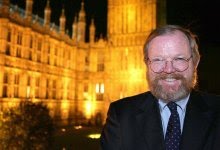
The 2013 RSC Bill Bryson Prize Competition has just been announced. The prize is designed to recognise and encourage excellent science communication in schools and colleges. The prize is supported by well-known writer and commentator Bill Bryson (above) who is also involved with the judging process.And there is an international category – so entries from Belgium are welcome!

The competition is open to all students aged 5-18 with entries accepted in any format as long as they accurately communicate science appropriate for their chosen audience. Entries could be in the form of videos, podcasts, posters, or cartoons and poems. Use your imagination – your creative idea is the key to success in this competition!

This year the question posed by the RSC Bill Bryson Prize is: ‘How does science keep us healthy?’

Students aged 5–18 around the world will be thinking up creative answers to this question. Competition entries can be submitted in any format, from posters to puzzles to podcasts, as long as the content fits with the 2013 theme.

Closing date
This popular competition will be judged in three categories, primary school, secondary school and international, with both individual and group entries accepted. The closing date for entries is 31 March 2013.

The best entries from each category will receive a prize of £500 (~€625) for their school, and £100 (~€125) for the winning students to share. Bill Bryson will present UK winners with their prizes in the Houses of Parliament.

Visit the RSC website for more information and details of how to enter. A promotional poster for the competition can be downloaded here.

Chemistry Week 2013
The theme of the Bill Bryson Prize fits with the theme of this year’s Chemistry Week, which will take place between 16 and 23 November 2013. The overall theme is ‘Health’ covering topics such as Ageing, Hygiene, Lifestyle, Nutrition and Future Health.

Friday, 23 November 2012

Higgs attracts Mass!

The fabled Higgs boson certainly attracted a mass of people to the Brel theatre at the British School of Brussels (BSB) on 21 November to hear about the work of Prof. Vincent Lemaitre and the Large Hadron Collider (LHC) at CERN. Well over 70 members of the public and students heard about the theory behind the Higgs boson and the work at CERN that led up to the ‘discovery’ on 4 July this year of a new fundamental particle that is (very probably) the ‘Higgs’.

Prof Vincent Lemaitre is Director of the Centre for Cosmology, Particle Physics and Phenomenology at the Universite Catholique de Louvain (UCL) and is an enthusiastic ambassador for his science and his passion clearly engaged with the audience.

Prof Lemaitre took us through what was effectively a highly condensed but accessible course on particle physics and cosmology – or as he put it the study of the “infinitely big and the infinitely small.” We learned about the ‘Big Bang’ and that – thanks to Einstein’s famous E=mc2 equation - we cannot have mass without energy – however you can have energy without mass. He also pointed out that the most important effect of the Higgs boson was to impart mass to the electron – without it there would be no chemistry and no life as we know it.

Vincent took us through interactions, particles and fields to the work of Robert Brout, Francois Englert and Peter Higgs (two Belgians from ULB and one Brit at Edinburgh University), their establishment of the so-called “symmetry breaking” mechanism in Quantum Field Theory that describes all fundamental interactions of nature and implied the existence of an auxiliary particle came to be known as the Higgs boson and the search for that particle.

He is a collaborator on the Compact Muon Solenoid (CMS) detector at the Large Hadron Collider (LHC) in CERN and described its operation, the mechanisms of the CMS detector components and the difficulties in detecting evidence for the Higgs particle.

After the presentation Prof Lemaitre continued an animated question and answer session with a crowd of excited students and others. He was keen to impart that the discovery on 4th July was only the beginning and a good twenty years of further research would be needed to characterise the new particle and realise new physics. But this would be the work of the “next generation of scientists – you!”

Wednesday, 17 October 2012

G4G Three

RSC Belgium took part in the third Greenlight for Girls Day in Brussels on Saturday October 13. The venue was the International School of Brussels in Watermael-Boitsfort. The RSC team had a great time runing three workshops on the theme of culinary chemistry to groups of enthusiastic young scientists.

The RSC Belgium team for the day consisted of (from left to right above) Amourie Prentice, Carolyn Ribes, Becki Scott, Albert Einstein and Rita Woodward with Tim Reynolds behind the camera. Our old friend Peter Casey of Blindseer Productions provided Einstein and the girls had great fun interacting with Albert throughout the day!

Each of the workshops brought together around a dozen young women aged 11 to 15. Most participants were anglophone but the RSC Belgium team was ready and able to work with the girls in French and Dutch too. Each of the students got to do a range of experiments during the 45 minute sessions including some cheese-making.

Other chemical based workshops offered during the day included sessions on cosmetics and fragrances, plastics and experiments from the hit TV series the 'Big Bang Theory'. Other workshops focused on IT, physics, engineering and biotechnology.

All the 250 - 300 young ladies who attended the day had a great time and took back some fantastic memories, a goody bag and their own personalised labcoat - provided this year by IT giant Google.

About G4G
The The Greenlight for Girls organisation is a Brussels-based, international non-profit organization that works to promote science, technology, engineering and mathematics (STEM) to girls of all ages and backgrounds. The main aim is to stimulate greater participation of girls, young women and career-age women in STEM-related studies and careers. To achieve this mission, G4G carry out a range of activities around the world, with a special focus on reaching less-advantaged communities.

Tuesday, 7 February 2012

LearnChemistry with RSC

The Royal Society of Chemistry (RSC) has just launched a comprehensive online site dedicated to chemistry education. And it is open to all.

The RSC's LearnChemistry website brings together hundreds of resources, a place to share ideas and support for both teachers and students.


The RSC has developed a huge range of educational resources and the LearnChemistry initiative brings them together in one place to make them easily accessible and searchable.

The site also takes a throughly modern approach to teaching using videos, simulations and interactive games to capture students attention and bring the fascination of chemistry into the classroom or home setting.

Talk chemistry
The site features the 'Talk Chemistry' area which provides teachers with a platform to talk about curriculum issues, share news and opinions.

The site also includes Gridlocks - a interactive chemistry game based on the Sudoku concept and a set of videos 'Faces of Chemistry' developed with industrial partners such as Johnson Matthey, Procter & Gamble and Syngenta. In addition the RSC has relaunched and augmented its Visual Elements Periodic Table (see below) to coincide with the LearnChemistry launch.


Content will be continuously added to the site. For example in March the RSC will launch its 2012 Olympic-themed chemistry and sport site. This will examine the role chemistry plays in every sport from archery to aerobics.

The RSC sees LearnChemistry as a community-led site so it is encouraging feedback and input from teachers and students. So why not take a look at LearnChemistry and help us create a new generation of people excited by chemistry.

Science in School
Another web-based resource that will be of interest is 'Science in School' - the European journal for science teachers. It covers not only biology, physics and chemistry, but also earth sciences, engineering and medicine, highlighting the best in teaching and cutting-edge research, and focusing on interdisciplinary work. The contents include teaching materials, recent discoveries in science, education projects, interviews with young scientists and inspiring teachers, and much more.


'Science in School' is freely available. Online articles are published in many European languages and an English-language print version is distributed across Europe. Originally supported by the European Commission, the journal is published and funded by EIROforum, a partnership between eight of Europe’s largest intergovernmental research organisations including including CERN, the European Space Agency (ESA) and the European Molecular Biology Laboratory (EMBL).

European school teachers are invited to help by:
• Submitting articles for publication
• Joining the referee panel and helping to decide which articles to publish
• Reviewing books and other resources for teachers
• Translating articles from English into their native languages.

To subscribe, learn more about the journal or read all the articles visit the Science in School website.