Tuesday, 5 February 2013

Healthy Science Prize

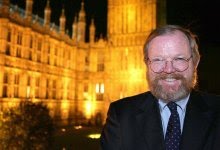
The 2013 RSC Bill Bryson Prize Competition has just been announced. The prize is designed to recognise and encourage excellent science communication in schools and colleges. The prize is supported by well-known writer and commentator Bill Bryson (above) who is also involved with the judging process.And there is an international category – so entries from Belgium are welcome!

The competition is open to all students aged 5-18 with entries accepted in any format as long as they accurately communicate science appropriate for their chosen audience. Entries could be in the form of videos, podcasts, posters, or cartoons and poems. Use your imagination – your creative idea is the key to success in this competition!

This year the question posed by the RSC Bill Bryson Prize is: ‘How does science keep us healthy?’

Students aged 5–18 around the world will be thinking up creative answers to this question. Competition entries can be submitted in any format, from posters to puzzles to podcasts, as long as the content fits with the 2013 theme.

Closing date
This popular competition will be judged in three categories, primary school, secondary school and international, with both individual and group entries accepted. The closing date for entries is 31 March 2013.

The best entries from each category will receive a prize of £500 (~€625) for their school, and £100 (~€125) for the winning students to share. Bill Bryson will present UK winners with their prizes in the Houses of Parliament.

Visit the RSC website for more information and details of how to enter. A promotional poster for the competition can be downloaded here.

Chemistry Week 2013
The theme of the Bill Bryson Prize fits with the theme of this year’s Chemistry Week, which will take place between 16 and 23 November 2013. The overall theme is ‘Health’ covering topics such as Ageing, Hygiene, Lifestyle, Nutrition and Future Health.

Monday, 4 February 2013

RSC Belgium now on Facebook!

For 2013 RSC Belgium has boosted its communication efforts by joining the 'Facebook generation'! Thanks to executive committee member Becki Scott the section now has its own Facebook page. So now you can find out all about RSC Belgium activities via the world's favourite social networking site: Facebook!

Why not visit the RSC Belgium page today, you can "like" us, comment on events and tell us what you think! Establishing the RSC Belgium Facebook page should help the section to more easily communicate our events and information with our existing members and friends and ease communication links with other networks in Belgium and beyond. In particular it will help us to find and communicate with student groups across Belgium.

And don't forget that you can also follow the section on Twitter!

Thursday, 31 January 2013

Stem Cell Therapy: A Potential Cure-all?

RSC Belgium held its first public event of the year on 25 January. Our latest Café Chimique tackled the issues around research into Stem Cell Therapy with two expert speakers, a patient viewpoint and many questions from an audience of over 60 RSC members and friends.

Stem cell therapy has been the source of both Nobel Prizes and much controversy over the past few years. It is the basis for a many new fields of medicine – most notably regenerative medicine – that offer hope for the alleviation and reversal of many critical degenerative conditions. It is also an area in which Europe leads the world in research, but in which regulatory issues abound.

A capacity crowd of over 60 RSC Belgium members and friends made their way on a snowy Friday evening to AutoWorld in Cinquantenaire Park, Brussels to hear from two expert speakers introduced by our chairman Bob Crichton (below, centre).

Our first speaker was Prof. Catherine Verfaillie (below, left) who is Director of the Stem Cell Institute at the Katholieke Universiteit Leuven (KUL). She was followed by Dr. Denis Dufrane (below, right) who works at the Faculty of Medicine, Universite Catholique de Louvain (UCL) at Woluwe.

In addition a patient’s viewpoint was presented via a five minute video interview with someone participating in a clinical trial. This was particularly poignant as it highlighted the physical and emotional demands of the stem cell harvesting process.

Potential cure-all?
There has been much coverage of the potential of stem cell therapy – but how much is hype and how much hope? Our two speakers took us through the ‘what and how’ of stem cells and the areas where they may have potential medical applications. These areas include insights into human development, drug discovery, the study of drug toxicity, the study of human diseases, cell therapy and tissue engineering.

Initial enthusiasm for stem cell therapy was focused on use of embryonic stem cells which do not age and have the potential to differentiate into all cell types and therefore could potentially heal all diseases. However there were and are many scientific and ethical questions around the use of such cells.

For these reasons research is now concentrated on adult stem cells which do age and did not have such a great potential for differentiation but through an intense global research effort it is possible to create cells that are nearly the equivalent of embryonic stem cells from any human cell. This work as opened the possibility of creating designer stem cells suitable for transplantation, tissue engineering and use in pharmaceuticals.

The Cafe Chimique format allows for an extended, informal question and answer session with the audience seated in small groups at tables. A gratis bar for wine, beer and soft drinks was open for participants throughout the evening and a variety of ‘nibbles and chips’ were also available on the tables.

2013 AGM
Just prior to the Café Chimique the section held its Annual General Meeting where the formal business of approving reports and accounts were undertaken and elections held for the executive committee that guides the section’s activities.

Section secretary Tim Reynolds presented a report on RSC Belgium’s during 2012 and highlighted two particularly enjoyable and well-attended events: the June visit to the Royal African Museum and Tom Frantzen’s sculpture garden in Tervuren and the Higgs boson event in November with Prof. Vincent Lemaitre.

A vote of thanks was made to long time co-opted committee member Elaine Francke who had stepped down during the year and to Chris Phanopoulos and Laura Yonge who had both decided to not seek re-election this year. All three were thanked for their efforts for the section.

Our treasurer, Rita Woodward presented the financial situation of the section. During 2012 the section had made a surplus of over €4300, but it was pointed out that this included grants paid in advance for a delayed joint event with two UK sections (Kent and Chilterns & Middlesex). The section auditor, Ralph Palim, noted that he had found the accounts systematically prepared and in excellent order as usual.

Chairman Prof. Bob Crichton thanked all members of the executive committee during 2012 for their hard work and support during the year. He highlighted the contributions of Rita and Peter Woodward in providing the drinks and nibbles for many of the events during the year that added so much to the evening meetings.

Elections
A number of posts were up for election as the incumbents had completed their two year term of office. The results of the election and the full membership of the 2013 Executive Committee can found on our Executive Committee page.

If you would like to receive a copy of the draft minutes of the 2013 AGM and/ or any of the reports and other paperwork submitted to the meeting, please contact the section secretary Tim Reynolds via email.
Friday, 23 November 2012

Higgs attracts Mass!

The fabled Higgs boson certainly attracted a mass of people to the Brel theatre at the British School of Brussels (BSB) on 21 November to hear about the work of Prof. Vincent Lemaitre and the Large Hadron Collider (LHC) at CERN. Well over 70 members of the public and students heard about the theory behind the Higgs boson and the work at CERN that led up to the ‘discovery’ on 4 July this year of a new fundamental particle that is (very probably) the ‘Higgs’.

Prof Vincent Lemaitre is Director of the Centre for Cosmology, Particle Physics and Phenomenology at the Universite Catholique de Louvain (UCL) and is an enthusiastic ambassador for his science and his passion clearly engaged with the audience.

Prof Lemaitre took us through what was effectively a highly condensed but accessible course on particle physics and cosmology – or as he put it the study of the “infinitely big and the infinitely small.” We learned about the ‘Big Bang’ and that – thanks to Einstein’s famous E=mc2 equation - we cannot have mass without energy – however you can have energy without mass. He also pointed out that the most important effect of the Higgs boson was to impart mass to the electron – without it there would be no chemistry and no life as we know it.

Vincent took us through interactions, particles and fields to the work of Robert Brout, Francois Englert and Peter Higgs (two Belgians from ULB and one Brit at Edinburgh University), their establishment of the so-called “symmetry breaking” mechanism in Quantum Field Theory that describes all fundamental interactions of nature and implied the existence of an auxiliary particle came to be known as the Higgs boson and the search for that particle.

He is a collaborator on the Compact Muon Solenoid (CMS) detector at the Large Hadron Collider (LHC) in CERN and described its operation, the mechanisms of the CMS detector components and the difficulties in detecting evidence for the Higgs particle.

After the presentation Prof Lemaitre continued an animated question and answer session with a crowd of excited students and others. He was keen to impart that the discovery on 4th July was only the beginning and a good twenty years of further research would be needed to characterise the new particle and realise new physics. But this would be the work of the “next generation of scientists – you!”

Tuesday, 20 November 2012

Woluwe win Keith Price Cup

RSC Belgium held its Belgian eliminator heat for the annual RSC Top of the Bench (TOTB) competition on Saturday 17 November at the British School of Brussels (BSB). It was a hard-fought struggle between teams from BSB, the European School II at Woluwe and European School I at Uccle. In a very close finish a team from Woluwe school eventually claimed the Keith Price Cup.

This was the second time that the RSC Belgium's TOTB eliminator has been held as an actual 'head-to-head' competition with a practical element. The seven teams of budding chemists (three from Woluwe, two from BSB and two from Uccle) had to complete a short written test on their individual chemical knowledge and data interpretation skills and then show teamwork and problem-solving abilities in a practical chemical exercise.

This format closely reflects the format of the competition that the winners will face in the final to be held in the UK (probably in London) in spring 2013. As usual Rita Woodward had devised the competition and set the questions.

Close competition
All seven teams consisted of four students aged between 14 and 16 and were accompanied by teachers. The practical aspect of the competition involved a timed reaction involving alka-seltzer tablets and sodium hydroxide. The teams had to determine the correct experimental configuration to neutralise the alkaline solution in 45 seconds - the endpoint of the reaction being monitored by a universal pH indicator.

When teams had worked out their own solution, their efforts were timed by judges Prof. Bob Crichton, Dr. Ian Carson, Dr Becki Scott and Tim Reynolds. Each team had two official 'timed' attempts.

The overall winners were determined by their team placing in both written and practical parts of the 'eliminator'.

The result was very tight with three teams (two from BSB and one from Uccle) tying for runner up position, but the winners were the ‘covalent’ team from the Woluwe European School. The winning teams are pictured above having been presented with the Keith Price Cup by branch chairman Prof Bob Crichton. The team will now represent Belgium in the (inter)national final in the UK in 2013. All the students who took part in the competition will also receive a certificate.

Clearly everyone who took part in the competition had an enjoyable time with both students and teachers very enthusiastic about this more competitive format. RSC Belgium looks forward to an even bigger and better Belgian TOTB eliminator next year.

Our thanks to all the teachers and students who took part in a really fun afternoon of chemistry!

Monday, 5 November 2012

Genes & Prizes

A capacity crowd of over 50 squeezed into the Swoosh Lounge at the British School of Brussels (BSB) to hear Prof Rene Rezsohazy from the Universite Catholique de Louvain consider the question: "Whatever happened to the Gene?". The event on 23 October 2012 was also the occasion for presentation of prizes to the winners of our 2012 Chemistry Challenge competition.

Our second evening event of the Autumn covered the topic of classical genetics with Prof Rene Rezsohazy of the Universite Catholique de Louvain (UCL) (see pictured below on right with section Chairman Bob Crichton).

Prof. Rezsohazy took us on a whistle-stop tour of the development of genetic science and molecular biology via a dozen or more Nobel Prize winners. He started with the founding 'dogma' of Beadle and Tatum of "one gene - one enzyme" and revealed the increasing complexity of structures and interactions that inform our understanding of how genes control development and function.

The discussion and questions continued well after the formal presentation with the aid of drinks and nibbles.

Prizes
The evening also saw the presentation of certificates and cash prizes to pupils from a variety of local schools who had excelled in our Chemistry Challenge Competition.

Pictured above (left) is overall winner - and recipient of the Keith Price Prize - Ally McDermott from BSB. Details of all prize winners for 2012 and, if you fancy trying your hand, a link to the Challenge papers can be found here.

Wednesday, 17 October 2012

G4G Three

RSC Belgium took part in the third Greenlight for Girls Day in Brussels on Saturday October 13. The venue was the International School of Brussels in Watermael-Boitsfort. The RSC team had a great time runing three workshops on the theme of culinary chemistry to groups of enthusiastic young scientists.

The RSC Belgium team for the day consisted of (from left to right above) Amourie Prentice, Carolyn Ribes, Becki Scott, Albert Einstein and Rita Woodward with Tim Reynolds behind the camera. Our old friend Peter Casey of Blindseer Productions provided Einstein and the girls had great fun interacting with Albert throughout the day!

Each of the workshops brought together around a dozen young women aged 11 to 15. Most participants were anglophone but the RSC Belgium team was ready and able to work with the girls in French and Dutch too. Each of the students got to do a range of experiments during the 45 minute sessions including some cheese-making.

Other chemical based workshops offered during the day included sessions on cosmetics and fragrances, plastics and experiments from the hit TV series the 'Big Bang Theory'. Other workshops focused on IT, physics, engineering and biotechnology.

All the 250 - 300 young ladies who attended the day had a great time and took back some fantastic memories, a goody bag and their own personalised labcoat - provided this year by IT giant Google.

About G4G
The The Greenlight for Girls organisation is a Brussels-based, international non-profit organization that works to promote science, technology, engineering and mathematics (STEM) to girls of all ages and backgrounds. The main aim is to stimulate greater participation of girls, young women and career-age women in STEM-related studies and careers. To achieve this mission, G4G carry out a range of activities around the world, with a special focus on reaching less-advantaged communities.