Tuesday, 19 March 2013

Dr. Norman Cecil Lloyd CChem FRSC


Dr. Norman Cecil Lloyd CChem FRSC
6 June 1928 to 17 March 2013


Members and Friends were sadden to hear the news of the sudden death of Dr. Norman Lloyd who passed away in the early hours of Sunday 17 March at home in Lasne. ‘Uncle Norm’ had a long and distinguished global career with Dow Corning and was a fervent supporter of RSC Belgium including as an active committee member from 2001 to 2006.

Always full of ideas and enthusiasm for chemistry, among many other achievements, he was responsible for organizing a number of excellent excursions (aka Lloyd’s Tours) for the section: including a memorable trip to Luxembourg in 2004.


Norman will be greatly missed by his wife Setsuko, children Kazumi and Michiko, his extended family, and his many friends and colleagues.

Norman’s funeral will take place at on Saturday afternoon, 23 March. A service of thanksgiving will take place at the All Saints’ Church in Waterloo at 15:00

All Saints’ Church, Waterloo
Chaussée de Charleroi 2
1420 BRAINE-L'ALLEUD

This will be followed by a gathering with friends and family at the Lloyd’s house in Lasne.

The Norman C. Lloyd scholarship
In lieu of flowers, Setsuko and the family would like donations to be made in the name of ‘Norman C. Lloyd’ to a scholarship fund that is being established by the Royal Society of Chemistry, Belgium section.

A donation would have special meaning for the family as the new scholarship fund is intended to support and encourage students to study chemistry, a subject very close to Norman’s heart.

Details of how to make a donation are given below.

Account name:
RSC Belgium Section
Bank:
ING Bank
Account no.:
IBAN BE91 3630 8144 4876    BIC: BBRUBEBB
Address:
The Royal Society of Chemistry Belgium Section
Rue Sainte Anne 13
1300 WAVRE

Please indicate that the donation is for the ‘Norman C. Lloyd fund’

Friday, 15 March 2013

White Gold at BSB

A good crowd of RSC Belgium members and friends braved some wintry weather on 14 March to hear a fascinating talk from forensic archaeologist Dr. Andrew Shortland of Cranfield University in the Swoosh Lounge at the British School of Brussels. Andrew described the work of his group in characterising porcelain - the 'white gold' of antiquity. 

Andrew started with the story of the 'Ruislip Vase' a seemingly modest piece of porcelain discovered in a very ordinary house in north-east London in 2010. Having been used recently as a bookend it was recognised as an 18th-century porcelain vase made for the Qianlong Emperor of China. Valued initially at £1 million it sold at auction for over £ 50 million: a world-record for such an artefact. However, the object was not collected or paid for by the purchaser and the vase has recently been finally sold by auctioneers Bonhams for a more modest - but still substantial - £20 - 25 million.


Clearly porcelain is truly a 'white gold'. This reputation has held true across the centuries and recently the volume of sales of antique porcelain has increased rapidly. And, of course, this attracts the interest of 'entrepreneurs'. Dr Shortland brings the techniques of modern analysis to porcelain with the aim of identifying copies and fakes in Chinese and European porcelain.

Art of porcelain
The production of the thin glass-like ceramic known as porcelain probably began in China in the first millennium BC, but the earliest fine examples date from circa 650 AD. From the early medieval period Chinese porcelain was being exported and was greatly prized throughout the royal courts of the old world.

There was huge competition to create porcelain in Europe to rival those pieces produced in East Asia and in the early years of the eighteenth century this was accomplished, first at Meissen and then throughout Germany, France, England and elsewhere. Early examples of both Chinese and European porcelain are rare and growing in value - as witnessed by the Ruislip vase story. They have therefore been extensively copied, both by the factories themselves and by others seeking to imitate their wares.

Andrew's talk showed how two modern non-destructive analytical techniques - hand held X-Ray Fluorescence (XRF) and Laser ablation inductively coupled plasma mass spectrometry (LA-ICP-MS) can distinguish between genuine early objects and later copies and fakes in both Chinese and European porcelains. His research has been conducted with a number of the world's leading auction houses who - obviously - have a keen interest in the findings.

The insights provided by Dr Shortland was appreciated by our audience and there was a very good discussion after his presentation about the determination of the true provenance of antiques and art objects.

Saturday, 9 March 2013

RSC Belgium launches 2013 Chemistry Challenge


Following a small pilot run in 2010 and two highly successful full runs in 2011 and 2012, RSC Belgium Section is happy to announce its Schools Chemistry Challenge 2013. 

The RSC Belgium Chemistry Challenge competition is open to students from any school in Belgium. The section is looking to make the 2013 Challenge an even bigger chemistry competition! In 2012, well over 100 students took part.

Details of the 2013 competition format can be accessed here. The Chemistry Challenge questions will be set in English, but may be answered in English, French, Dutch or German.

The competition is open to school students in their penultimate year of High School (usually aged 16 – 17) and consists of a total of two hours of written test papers held in individual schools and designed to demonstrate the participants’ knowledge of chemistry and their ability to think logically.

Two formats
For 2013 the Challenge can be taken in two ways: either as a single two-hour paper (as for 2012) or split into three stand-alone, separate sections (Section A 30 minutes, Section B 60 minutes and Section C 30 minutes) which teachers might find easier to work into their timetable constraints. Teachers would need to decide on their preference by the time they tell us the approximate numbers of students that will participate in the 2013 challenge from their school.

To get a taste of the Challenge you can access the 2012 papers here.

There are plenty of attractive cash prizes on offer for the highest scoring entries, as well as certificates acknowledging participation for everyone who takes part.

We have found that students find that participation in the Challenge is a valuable ‘plus point’ when completing University application forms, clearly demonstrating an ‘extra curricular’ interest in science.

More information
For further information, please contact our challenge coordinator Rita Woodward via email and section secretary Tim Reynolds as soon as possible.

The common curriculum on which the competition will be based will be circulated for validation by teachers in the near future. The Challenge papers will then be distributed to participating schools in mid-May with completed papers to be returned to Rita during June.

Thursday, 7 March 2013

Powering Ahead with the President

RSC Belgium was delighted to welcome RSC President Prof Lesley Yellowlees to the section on the evening of Monday 4 March. Lesley’s talk on Solar Power in the Brel Theatre at the British School of Brussels (BSB) was well received and topped off a hectic long weekend for her on RSC business in Brussels.

Prof. Yellowlees is the first woman to hold the Presidency of the Royal Society of Chemistry. She held a personal chair in Inorganic Electrochemistry at the University of Edinburgh and is currently Vice Principal of the University and Head of the College of Science and Engineering. Lesley’s research interests include inorganic electrochemistry, epr spectroscopy, novel processes for carbon dioxide conversion and solar energy: her topic for discussion on Monday evening.


Just over 60 members and friends heard Lesley describe the problems posed by the ever increasing demand for electricity from an ever increasing global population. To meet these demands will require sustainable renewable energy sources. For Prof Yellowlees this means solar power and this is an area where chemistry is making a big contribution.

Solar and chocs
Lesley outlined how Dye Sensitised Solar Cells work and the research that she has undertaken in Edinburgh to characterise such cells using techniques such as uv/vis and epr spectroelectrochemistry in the search for optimised formulation that can provide us with cheap solar power. Lesley’s presentation from 4 March is available here.

A recent RSC Policy document on Solar Fuels and Artificial Photosynthesis shows how current and future science and innovation could change our future energy options.

Following Lesley’s talk members and friends enjoyed a special drinks reception featuring a ‘chocolate tasting’ courtesy of Centho Chocolates.

Lesley was accompanied on Monday evening by RSC CEO Robert Parker. The two were in Brussels following the major triennial RSC Editors Symposium that had been held in the city over the weekend involving some 300 editors of RSC publications and 80 RSC staff. RSC Belgium chairman Bob Crichton and section secretary Tim Reynolds had been invited to the symposium banquet on Sunday evening at the Concert Noble

CSA visit
Lesley and Robert were also able to meet at the European Commission’s Chief Scientific Adviser, Prof Anne Glover on Monday morning. The meeting was arranged by Tim Reynolds and they discussed a number of issues where RSC could support or input to Commission initiatives, including topics such as diversity and promoting the value of science education to school students.


Prior to taking up her position as at the Commission Anne Glover was CSA to the Scottish government and Anne still has a laboratory and personal chair in at Aberdeen University, so Lesley and Anne have known each other for a number of years. Anne, like Lesley, is a passionate believer in the need to ensure science – and factual evidence in general – is at the core of policy making. Clear communication of science is a key element of this.

Tuesday, 5 February 2013

Healthy Science Prize

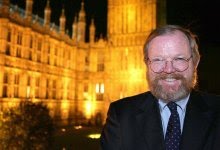
The 2013 RSC Bill Bryson Prize Competition has just been announced. The prize is designed to recognise and encourage excellent science communication in schools and colleges. The prize is supported by well-known writer and commentator Bill Bryson (above) who is also involved with the judging process.And there is an international category – so entries from Belgium are welcome!

The competition is open to all students aged 5-18 with entries accepted in any format as long as they accurately communicate science appropriate for their chosen audience. Entries could be in the form of videos, podcasts, posters, or cartoons and poems. Use your imagination – your creative idea is the key to success in this competition!

This year the question posed by the RSC Bill Bryson Prize is: ‘How does science keep us healthy?’

Students aged 5–18 around the world will be thinking up creative answers to this question. Competition entries can be submitted in any format, from posters to puzzles to podcasts, as long as the content fits with the 2013 theme.

Closing date
This popular competition will be judged in three categories, primary school, secondary school and international, with both individual and group entries accepted. The closing date for entries is 31 March 2013.

The best entries from each category will receive a prize of £500 (~€625) for their school, and £100 (~€125) for the winning students to share. Bill Bryson will present UK winners with their prizes in the Houses of Parliament.

Visit the RSC website for more information and details of how to enter. A promotional poster for the competition can be downloaded here.

Chemistry Week 2013
The theme of the Bill Bryson Prize fits with the theme of this year’s Chemistry Week, which will take place between 16 and 23 November 2013. The overall theme is ‘Health’ covering topics such as Ageing, Hygiene, Lifestyle, Nutrition and Future Health.

Monday, 4 February 2013

RSC Belgium now on Facebook!

For 2013 RSC Belgium has boosted its communication efforts by joining the 'Facebook generation'! Thanks to executive committee member Becki Scott the section now has its own Facebook page. So now you can find out all about RSC Belgium activities via the world's favourite social networking site: Facebook!

Why not visit the RSC Belgium page today, you can "like" us, comment on events and tell us what you think! Establishing the RSC Belgium Facebook page should help the section to more easily communicate our events and information with our existing members and friends and ease communication links with other networks in Belgium and beyond. In particular it will help us to find and communicate with student groups across Belgium.

And don't forget that you can also follow the section on Twitter!

Thursday, 31 January 2013

Stem Cell Therapy: A Potential Cure-all?

RSC Belgium held its first public event of the year on 25 January. Our latest Café Chimique tackled the issues around research into Stem Cell Therapy with two expert speakers, a patient viewpoint and many questions from an audience of over 60 RSC members and friends.

Stem cell therapy has been the source of both Nobel Prizes and much controversy over the past few years. It is the basis for a many new fields of medicine – most notably regenerative medicine – that offer hope for the alleviation and reversal of many critical degenerative conditions. It is also an area in which Europe leads the world in research, but in which regulatory issues abound.

A capacity crowd of over 60 RSC Belgium members and friends made their way on a snowy Friday evening to AutoWorld in Cinquantenaire Park, Brussels to hear from two expert speakers introduced by our chairman Bob Crichton (below, centre).

Our first speaker was Prof. Catherine Verfaillie (below, left) who is Director of the Stem Cell Institute at the Katholieke Universiteit Leuven (KUL). She was followed by Dr. Denis Dufrane (below, right) who works at the Faculty of Medicine, Universite Catholique de Louvain (UCL) at Woluwe.

In addition a patient’s viewpoint was presented via a five minute video interview with someone participating in a clinical trial. This was particularly poignant as it highlighted the physical and emotional demands of the stem cell harvesting process.

Potential cure-all?
There has been much coverage of the potential of stem cell therapy – but how much is hype and how much hope? Our two speakers took us through the ‘what and how’ of stem cells and the areas where they may have potential medical applications. These areas include insights into human development, drug discovery, the study of drug toxicity, the study of human diseases, cell therapy and tissue engineering.

Initial enthusiasm for stem cell therapy was focused on use of embryonic stem cells which do not age and have the potential to differentiate into all cell types and therefore could potentially heal all diseases. However there were and are many scientific and ethical questions around the use of such cells.

For these reasons research is now concentrated on adult stem cells which do age and did not have such a great potential for differentiation but through an intense global research effort it is possible to create cells that are nearly the equivalent of embryonic stem cells from any human cell. This work as opened the possibility of creating designer stem cells suitable for transplantation, tissue engineering and use in pharmaceuticals.

The Cafe Chimique format allows for an extended, informal question and answer session with the audience seated in small groups at tables. A gratis bar for wine, beer and soft drinks was open for participants throughout the evening and a variety of ‘nibbles and chips’ were also available on the tables.

2013 AGM
Just prior to the Café Chimique the section held its Annual General Meeting where the formal business of approving reports and accounts were undertaken and elections held for the executive committee that guides the section’s activities.

Section secretary Tim Reynolds presented a report on RSC Belgium’s during 2012 and highlighted two particularly enjoyable and well-attended events: the June visit to the Royal African Museum and Tom Frantzen’s sculpture garden in Tervuren and the Higgs boson event in November with Prof. Vincent Lemaitre.

A vote of thanks was made to long time co-opted committee member Elaine Francke who had stepped down during the year and to Chris Phanopoulos and Laura Yonge who had both decided to not seek re-election this year. All three were thanked for their efforts for the section.

Our treasurer, Rita Woodward presented the financial situation of the section. During 2012 the section had made a surplus of over €4300, but it was pointed out that this included grants paid in advance for a delayed joint event with two UK sections (Kent and Chilterns & Middlesex). The section auditor, Ralph Palim, noted that he had found the accounts systematically prepared and in excellent order as usual.

Chairman Prof. Bob Crichton thanked all members of the executive committee during 2012 for their hard work and support during the year. He highlighted the contributions of Rita and Peter Woodward in providing the drinks and nibbles for many of the events during the year that added so much to the evening meetings.

Elections
A number of posts were up for election as the incumbents had completed their two year term of office. The results of the election and the full membership of the 2013 Executive Committee can found on our Executive Committee page.

If you would like to receive a copy of the draft minutes of the 2013 AGM and/ or any of the reports and other paperwork submitted to the meeting, please contact the section secretary Tim Reynolds via email.